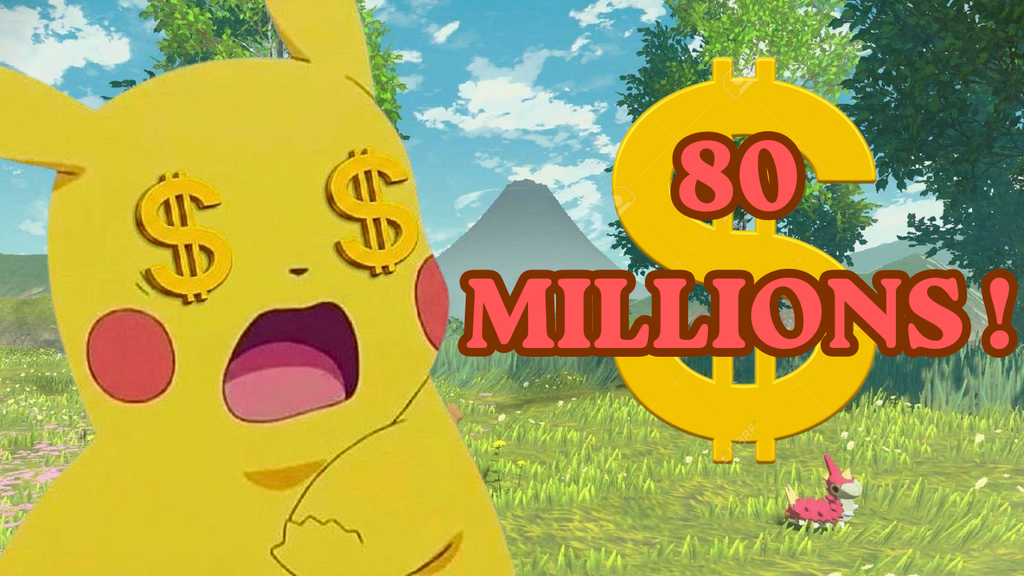
Some masterstrokes command respect, and others leave you flat-out speechless. At Nintendo, it seems they have found the magic formula for turning the past into gold, and with disconcerting regularity. Recently, the Kyoto-based company revealed some dizzying figures: the re-releases of Pokémon FireRed and Pokémon LeafGreen, two titles that are already 22 years old, generated the tidy sum of 80 million dollars. Yes, you read that right. 80 million for games originally released on the Game Boy Advance, now available on the Nintendo Switch online store.
A commercial success that defies time and reason
When Nintendo announced that these two games would be available on the Switch eShop, the community reacted with a mix of enthusiasm and skepticism. The price, sometimes around 17 euros for what amounted to a simple Game Boy Advance ROM, drew criticism. Yet despite these initial reservations, the craze was massive. In just six weeks after their release, the two games sold more than 4 million copies worldwide. A score that observers called ‘insane’, especially when it comes to ‘legacy content’, that is, older content.
These impressive financial results put the re-releases on a par with, or even above, the launches of many recent games, including AAA productions that take years of development. Nintendo, nicknamed ‘Big N’ by insiders, shows once again its ability to tap into its players’ reservoir of nostalgia and turn it into an extremely powerful commercial lever. It is a veritable ‘cheat code’ for getting rich easily, as a recent analysis points out.
The recipe for success: nostalgia, anniversary and word of mouth
Several factors explain this resounding success. First of all, the release timing is no accident. These ports were launched to coincide with the 30th anniversary of the Pokémon franchise, celebrated in February. Giving fans the chance to relive the adventures of the first generation, the one that left its mark on so many players, was a bold and profitable marketing strategy. The aura of Pokémon FireRed and LeafGreen, two legendary games that introduced millions of people to the Pokémon universe, played a crucial role.
This success was built mainly on word of mouth and the natural enthusiasm of fans, without requiring a massive communication campaign. Players, eager to rediscover their childhood memories, rushed to these titles, proving that sentimental value can outweigh purely technical considerations or price. It is the power of the emotional connection that Nintendo has cultivated over the decades.
Nintendo, the undisputed master of video game heritage
The performance of the Pokémon FireRed and LeafGreen ports is just one example among others of Nintendo’s strategy. The company has always known how to make the most of its game catalog, offering re-releases, remakes and ports that systematically meet with real success. Whether on 3DS, Wii U, or now on Switch, Nintendo manages to bring its classics back to life by giving them a second youth and, above all, by monetizing them effectively.
-
The power of nostalgia as a sales driver.
-
The strategic timing of releases (franchise anniversaries).
-
The loyalty of an engaged fan community.
-
Nintendo’s ability to adapt its older titles to modern platforms.
The question now arises for the future Nintendo Switch 2: what will be the next step in this strategy? Nintendo seems to have found the recipe for making the most of its rich video game heritage, turning every release of an old game into a major commercial event. The 80 million dollars generated by these two Pokémon games may only be a foretaste of what the future has in store, proving that for Big N, the past is an inexhaustible gold mine.