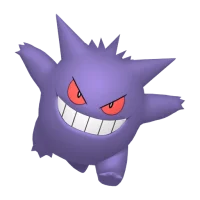
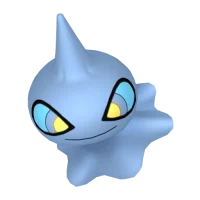
Released on September 12, 2009 in Japan and on March 26, 2010 in France, Pokémon HeartGold and SoulSilver are the Nintendo DS remakes of Gold and Silver. Ten years after the originals, GAME FREAK retraces the journey through Johto and Kanto with fourth-generation mechanics and a host of new ideas. For many players, it is the series’ definitive remake.
A faithful and generous remake
HeartGold and SoulSilver fully retell the 1999 adventure: New Bark Town, the eight Johto Gyms, Team Rocket and its schemes at the Radio Tower, the Pokémon League, then the whole Kanto region and its eight extra Badges, all the way to the battle against Red at the summit of Mt. Silver. Nothing has been removed, and a lot has been added: the Gyms all have new puzzles, the Rocket executives have been fleshed out, and the story of Suicune and Eusine, borrowed from Crystal, enriches that of the Ecruteak City towers.
The Pokémon that follows you
The idea that stuck with every player: the first Pokémon in your party walks behind you, like Pikachu in Pokémon Yellow, but for each of the hundreds of species. You can talk to it, and it reacts to its surroundings and shows its mood. This detail gives the game a warmth that no entry has truly recaptured since.
New features everywhere
The Pokéwalker, a pedometer included with the game, lets you carry a Pokémon around in your pocket and catch other Pokémon with it. The Pokéathlon offers sporting events played with the stylus. The Safari Zone returns, customizable with blocks. The Battle Frontier from Platinum is brought back, and Gym Leaders can be rebattled thanks to the Pokégear. The music has been remastered, and an item even lets you listen to the original sounds again once all sixteen Gym Leaders have been defeated.
Fourth-generation mechanics
Abilities, Natures, the split between physical and special moves: battles benefit from all the changes of the fourth generation, which makes Johto far more strategic than in 1999. Sinnoh and Hoenn Pokémon appear after the main adventure, via the Safari Zone, the Pokéwalker or trades. The game can be played entirely with the stylus if you wish.
The drawbacks
The flaws mostly stem from the legacy of Gold and Silver. The level curve is poorly balanced: Johto’s wild Pokémon remain low-level, and Kanto, despite its eight Badges, offers teams of similar level, which calls for long training sessions before Mt. Silver. HMs are still numerous, and Kanto feels emptier than Johto. Finally, the Pokéwalker, which holds several bonuses, is often missing from second-hand game cards.
The reception
The press welcomed these remakes warmly: an average of 87 out of 100 on Metacritic, 17 out of 20 from Jeuxvideo.com and 37 out of 40 from Famitsu. They sold 12.72 million copies as of March 31, 2014, according to Nintendo.
Playing it today
HeartGold and SoulSilver exist only as Nintendo DS game cards, playable on DS, DSi and 3DS. They have never been re-released, and the game cards, especially with the Pokéwalker, have become expensive. To transfer your Pokémon, you have to go through the Poké Transfer Lab in Black and White or Black 2 and White 2, then through the Poké Transporter app and Pokémon Bank on 3DS (announced to close on February 26, 2027), and finally through Pokémon HOME.
Our verdict
A remake of exemplary generosity, which elevates Gold and Silver without taking anything away from them. One of the best games in the series, provided you can find a game card.
What we like
- Two full regions and Red on Mt. Silver
- The Pokémon that follows you
- Pokéwalker, Pokéathlon, Safari Zone, Battle Frontier
- Fourth-generation mechanics and remastered music
What we like less
- A poorly balanced level curve
- Kanto less dense than Johto
- Pokéwalker often missing from second-hand game cards