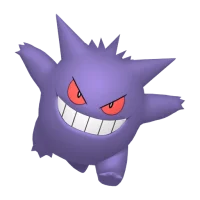
Pokémon Rumble Rush took the ideas of the Rumble series and adapted them for the phone. This page explains how the game was played: automatic battles, catching, summons, bosses and finding stages. The game has not been playable since July 2020.
Playing and catching
Stages followed a single path. The toy Pokémon moved forward on its own and headed for the first enemy in range; the player tapped an enemy to attack it, or swiped sideways to dodge. A defeated Pokémon sometimes dropped to the ground and could be caught. If it was defeated while stunned or shiny, catching it was guaranteed. At the end of a stage, a summary showed the Pokémon obtained, their CP, their moves and their gears, which did not change.
CP and gears
CP measured the Pokémon’s attack; HP, defense and critical hits were counted separately. Only gears could increase CP. See Gears and Ores.
Summons
A special gear, the Summon Gear, could be assigned to a Pokémon so that it could be “summoned”. A gauge filled with each Pokémon defeated; once full, you just had to tap it for the summoned Pokémon to launch its attack. Summon Gears could also be upgraded.
Bosses and Super Bosses
Each stage ended with a boss, bigger and tougher, often surrounded by minions. New in this entry, Super Bosses, found on the islands and in tournaments, had more moves and had to be defeated against the clock. They could charge up and generate shields that only a powerful move or a summon could break.
Finding stages
You explored by dropping a feather at random on the map, earned by defeating bosses or replaying stages, to locate an area. Stages had different rarities, with the corresponding Pokémon. You could save a stage to return to it. Balloons floating on the map gave access to other players’ profiles: for one hour, you could go to their favorite stage, with their Pokémon as an ally.
Our guide from back then, Game Mechanics, is still online.