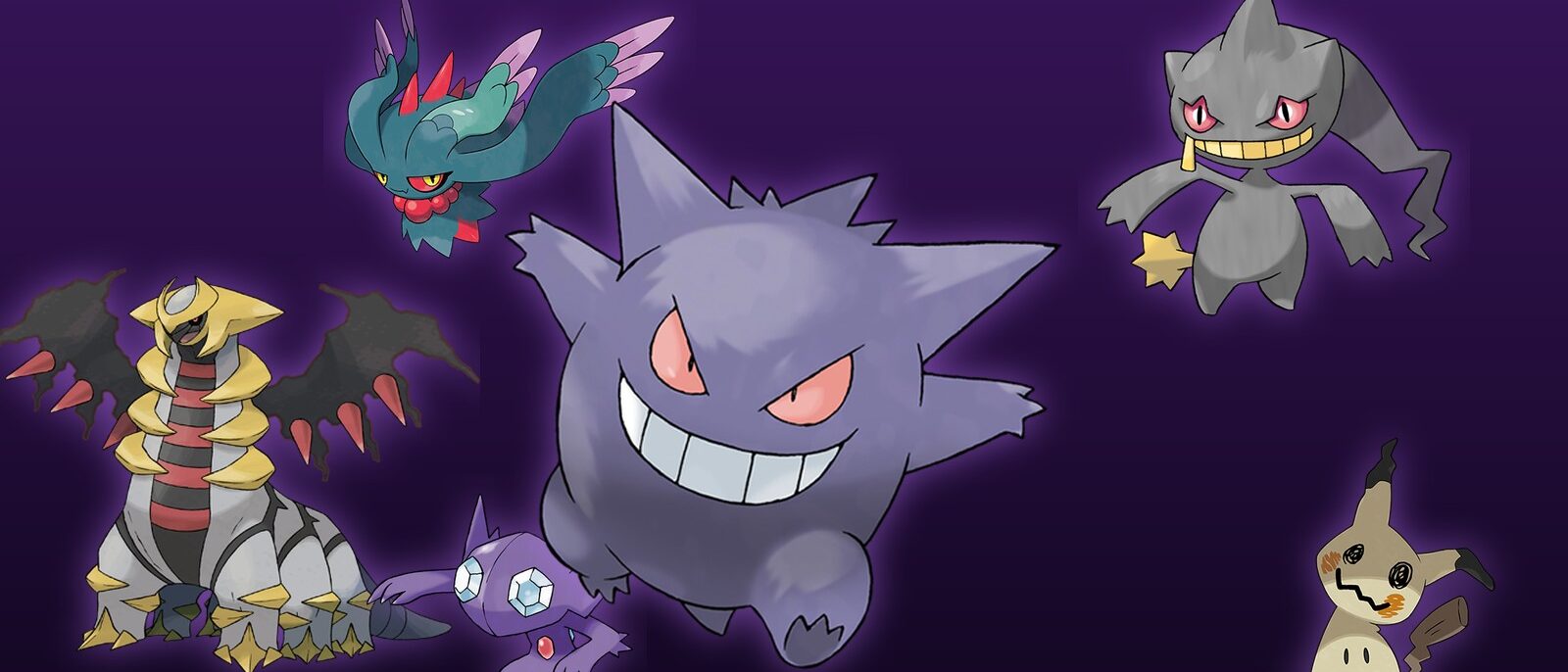
They walk through walls, haunt towers and old mansions, and laugh off punches: Ghost-type Pokémon are among the most fascinating in the series. Long rare and often fearsome in battle, they follow rules all their own. For Halloween, here is everything you need to know about this one-of-a-kind type, from its strengths and weaknesses to its most memorable members.
The type chart to know by heart
Ghost is one of the most unusual types on the type chart, with two defensive immunities and one offensive immunity. Here is how it currently works, as it has since the sixth generation:
| Super effective (×2) | Not very effective (×½) | No effect (×0) | |
|---|---|---|---|
| Ghost-type moves against… | Psychic, Ghost | Dark | Normal |
| Ghost-type Pokémon against… | Ghost, Dark | Poison, Bug | Normal, Fighting |
Remember this above all: a Ghost-type Pokémon takes no damage from Normal-type or Fighting-type moves, and it is weak to Ghost-type and Dark-type moves. Watch out for the classic trap: Ghost-type moves do not affect Normal-type Pokémon, so the immunity works both ways.
From three ghosts to 76 Pokémon: a turbulent history
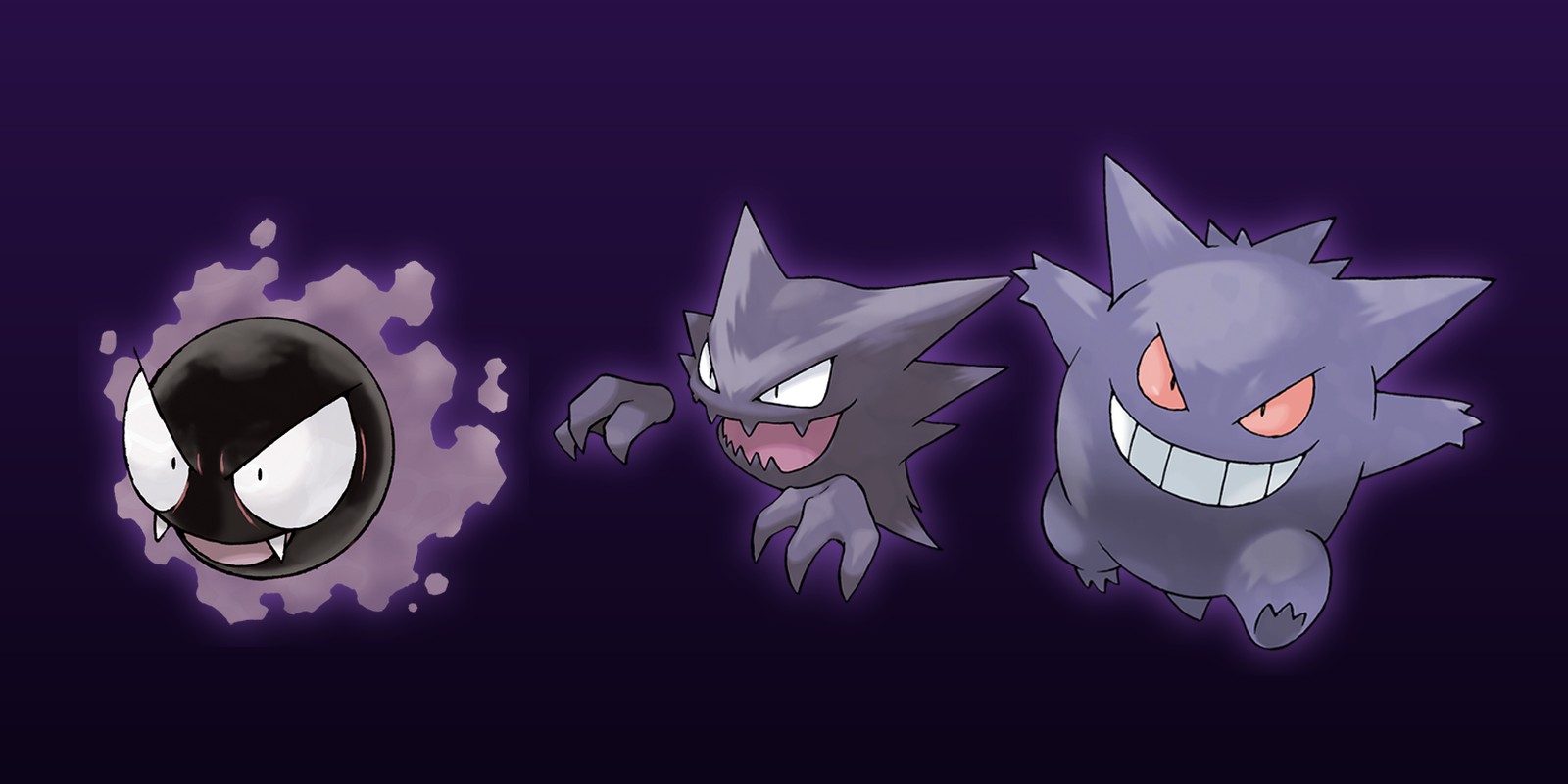
In Pokémon Red and Blue, the Ghost type boils down to a single family:  Gastly,
 Haunter and
 Gengar, all three of them Ghost and Poison types. The move list was hardly better, with only three Ghost-type moves: Lick, Night Shade and Confuse Ray. Since Night Shade deals fixed damage that ignores types, Lick was in practice the only Ghost-type move whose damage depended on the type chart.
That first generation also holds a famous oddity: Ghost-type moves had no effect on Psychic-type Pokémon, even though the opposite was supposed to be true. A Trainer in the Saffron City Gym even claimed that Psychic-type Pokémon were weak only to Ghost and Bug. The anomaly, probably unintentional, was fixed in the second generation, which made Ghost super effective against Psychic and introduced the Dark and Steel types. Steel, incidentally, would resist Ghost-type moves until the sixth generation. Another detail of the era: up to the third generation, all Ghost-type moves were physical.
Since then, the family has grown considerably: counting regional forms and Mega Evolutions, 76 Pokémon can now be Ghost types, which still makes it one of the rarest types. The ninth generation was particularly generous, with thirteen new Ghost-type species, from  Skeledirge to
 Pecharunt. Some were even without a weakness for a long time: the Dark and Ghost combination of
 Sableye and
 Spiritomb had no weakness at all until the Fairy type arrived.
Mechanics unique to Ghost types
Beyond the type chart, Ghost types benefit from several special rules, and their moves are among the most original in the game:
- Elusive: since the sixth generation, a Ghost-type Pokémon can always flee a wild battle and switch out, even against a move or Ability that would normally block escape. Even the Shadow Tag Ability, which prevents fleeing, cannot hold them.
- Curse: when used by a Ghost type, this move costs it half of its HP but makes the target lose a quarter of its HP every turn. Used by any other type, it raises Attack and Defense at the cost of Speed.
- Trick-or-Treat: this seasonal move, introduced in Pokémon X and Y, adds the Ghost type to the target. Only Pumpkaboo and Gourgeist can learn it.
- Destiny Bond and Grudge: if the Pokémon is knocked out, its opponent faints along with it (Destiny Bond) or has the PP of the responsible move dropped to zero (Grudge).
- Shadow Sneak and Hex: the first strikes with priority, while the second doubles in power if the target has a status condition.
- Shadow Force and Phantom Force: the Pokémon vanishes for a turn before striking, getting through Protect. Shadow Force is exclusive to Giratina, while Phantom Force is a weaker version of it.
- Last Respects and Rage Fist: two recent moves that grow in power, the first for each fainted ally, the second for each hit taken.
To get around the Ghost types’ immunity to Normal-type and Fighting-type moves, there are a few workarounds, such as the Scrappy Ability or, more recently, Mind’s Eye, exclusive to  Bloodmoon Ursaluna. The moves Foresight and Odor Sleuth played the same role in older games.
Ten Ghost types that left their mark on the series
- Gengar, the pioneer. Fast and offensive, it is one of the most iconic Pokémon of the type. Its Mega Evolution, which has the Shadow Tag Ability, was judged so powerful that the Smogon competitive community banned it from its main format as early as 2013.
 Shedinja, the enigma. The only Bug and Ghost Pokémon, it has just 1 HP but possesses Wonder Guard, a unique Ability that makes it immune to every attack that is not super effective. It mysteriously appears in your party when Nincada evolves, provided you have a free slot.
- Sableye, the mischievous one, the first Dark and Ghost Pokémon, long without any weakness.
- Spiritomb, the creature of 108 spirits, bound to an Odd Keystone.
 Giratina, the legendary Pokémon of the Distortion World, a Ghost and Dragon type that switches from its Altered Forme to its Origin Forme.
 Aegislash, the living sword. Its Stance Change Ability makes it alternate between a defensive form and an offensive form. Too strong for Smogon’s regular tiers, it was sent to Ubers in 2014.
 Mimikyu, the Pikachu fan. Its Disguise Ability lets it take a first hit without damage.
 Flutter Mane, the ghost of the past. The only Ghost-type Paradox Pokémon, inspired by
 Misdreavus, it was banned from Smogon’s OU format just two days after the release of Scarlet and Violet, and it dominated VGC in 2023.
 Gholdengo, the treasure. Its Good as Gold Ability blocks opposing status moves, and its Make It Rain wreaks havoc. It remains one of the pillars of Pokémon Champions to this day.
 Annihilape, rage from beyond the grave. To get one, Primeape must use Rage Fist twenty times, a move that gains power with every hit taken.
What Ghost types should you play today?
In Pokémon GO, Mega Gengar remains the benchmark among Ghost-type raid attackers, with Lick and Shadow Ball, ahead of  Mega Banette and the Shadow versions of
 Chandelure and Gengar. Origin Forme Giratina, with Shadow Force, is also a very good choice.
In Pokémon Champions, Gholdengo is among the most-played Pokémon in competitive play, and Mega Gengar has made a fine breakthrough: with Shadow Tag, it traps opponents on the field, a formidable asset when paired with Perish Song. The Frenchman Anthony Liuzzo placed 5th at the Frankfurt Regional with such a team, which we break down in our feature on Regulation M-C teams.
In Pokémon Legends: Z-A, the type has been enriched with new Mega Evolutions: Mega Chandelure and  Mega Froslass in the base game, then
 Mega Golurk and
 Mega Absol Z, a Dark and Ghost type, with the Mega Dimension expansion. In Scarlet and Violet,
 Houndstone,
 Ceruledge and Skeledirge offer solid options for an adventure in Halloween colors.
Ghosts and legends: the Ghost type in the Pokémon universe
The Ghost type is also an atmosphere. It all begins in Lavender Town, in Pokémon Tower, a seven-story graveyard where ghosts cannot be identified without the Silph Scope. At the top, the player frees Mr. Fuji, held captive by Team Rocket, after calming the ghost of a mother  Marowak who fell protecting her young. Hoenn has its Mt. Pyre, where the souls of Pokémon rest, and Sinnoh its Old Chateau, with its paintings whose eyes follow the player and a
 Rotom hidden in a television at night.
Nearly every region also has its own specialist in the type:
| Generation | Specialist | Role |
|---|---|---|
| 1 | Agatha | Kanto Elite Four |
| 2 | Morty | Ecruteak City Gym Leader |
| 3 | Phoebe | Hoenn Elite Four |
| 4 | Fantina | Hearthome City Gym Leader |
| 5 | Shauntal | Unova Elite Four |
| 7 | Acerola | Ula’ula Island Captain, later Elite Four |
| 8 | Alistair | Stow-on-Side Gym Leader (Pokémon Shield) |
| 9 | Ryme | Montenevera Gym Leader |
Kalos is an exception, with no Ghost specialist in its League, but Pokémon Legends: Z-A made up for the oversight with Gwynn, a member of the Fist of Justice, who teams up with Chandelure.
Key takeaways
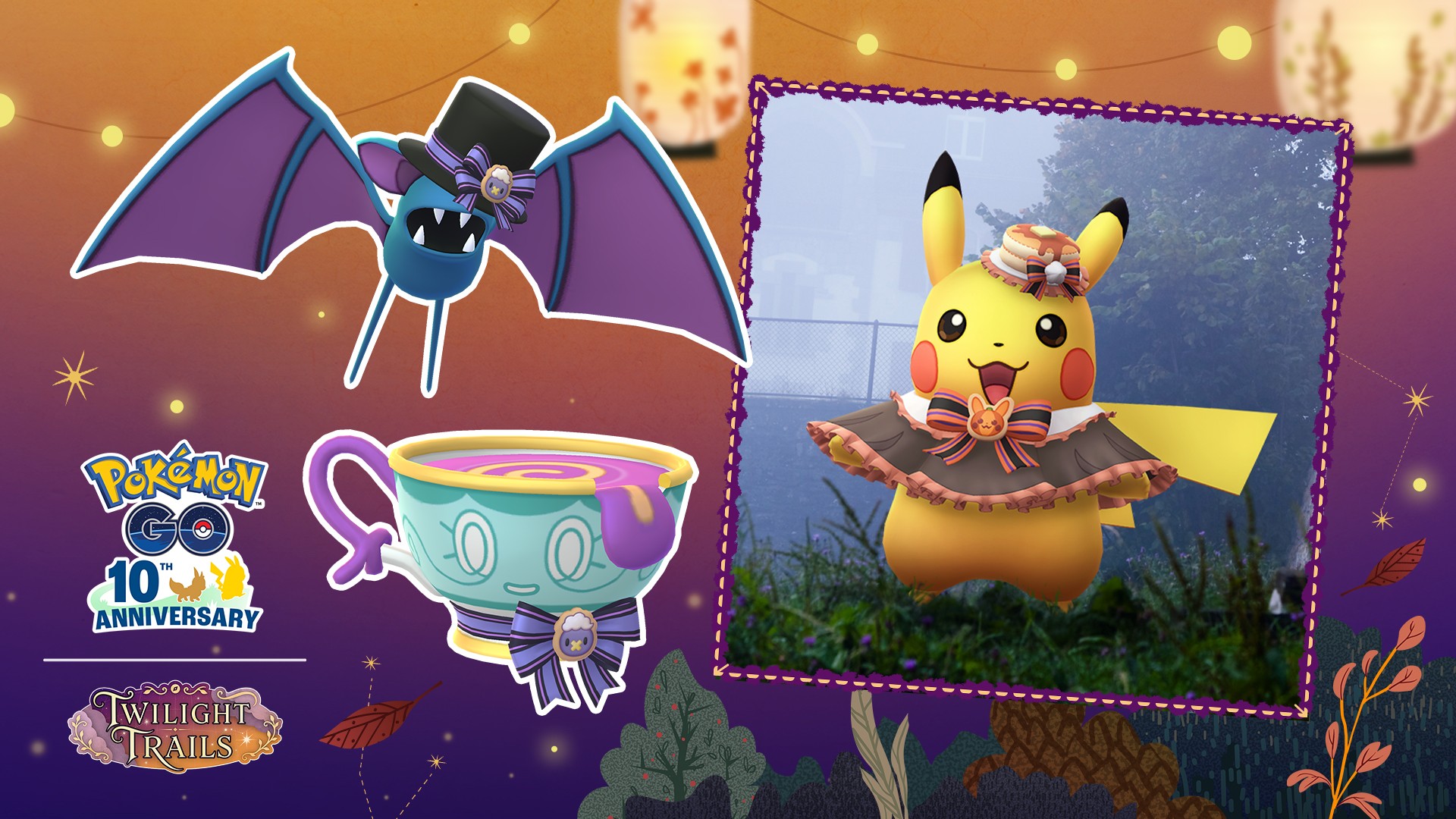
Immune to Normal-type and Fighting-type moves, weak to Ghost and Dark, always free to flee: the Ghost type plays by its own rules. Starting from a single family in 1996, it now counts 76 members, including some of the most fearsome Pokémon in the history of competitive play. To keep the party going, Pokémon GO celebrates Halloween from October 27 to November 1st with costumed Pokémon, including  Zubat and
 Sinistea.
Sources: Poképédia (French) ; Bulbapedia ; PokéAPI ; Smogon ; Pokémon GO (French).