| Original title | Pokémon Pinball (ポケモンピンボール) |
|---|---|
| Platform | Game Boy Color (playable on Game Boy and Super Game Boy, with reduced features) |
| Developers | Jupiter Corporation, HAL Laboratory |
| Publisher | Nintendo |
| Genre | Pinball |
| Players | 1 |
| Japan release | April 14, 1999 |
| North America release | June 28, 1999 |
| Europe and France release | October 6, 2000 |
| Accessories | Built-in rumble (AAA battery), infrared port for scores, Game Boy Printer |
| Ratings | PEGI 3+, ESRB E, CERO A |
| Languages of the European edition | English, German, French, Italian, Spanish |
| European manual reference | DMG-VPHP-NEU6 |
| Sequel | Pokémon Pinball: Ruby & Sapphire (Game Boy Advance, 2003) |
| Sales | Approximately 5.31 million copies worldwide (CESA, 2021 white paper) |
Release dates
Pokémon Pinball was released in three stages. Japan received it on April 14, 1999, before any other region. North America followed on June 28, 1999. Europe had to wait until October 6, 2000: that is the release date given on Nintendo France’s official page. Sources disagree about Australia: July 13, 1999 according to Poképédia, July 2000 according to an archive page cited by Bulbapedia. We do not take a side.
| Region | Release date | Notable features |
|---|---|---|
| Japan | April 14, 1999 | English interface with Pokémon names in rōmaji; Pokédex entries taken from Pokémon Yellow; HOLE indicators |
| North America | June 28, 1999 | CAVE indicators; Pokédex entries taken from Red and Blue; black-skinned Jynx |
| Europe and France | October 6, 2000 | Language selection the first time you switch on; purple-skinned Jynx; rumble adjustable to three levels; three preset button layouts |
The differences are detailed on our regional differences page.
Hardware and cartridge
The game is designed for the Game Boy Color, but it also runs on the original Game Boy: in that case, the table borders change texture, the letters of the indicators disappear and the Pokédex animations are no longer available. On Super Game Boy, the game is shown with its own frame, but the rumble is disabled.
The cartridge contains a vibration motor, powered by an AAA battery supplied with the game. Nintendo presented it as its first cartridge with built-in rumble, and the “Rumble Game” sticker on the European box points this out. The rumble setting is found in the Options menu; in the European version, it offers three levels, off, light and strong, and remains accessible during the game from the pause menu. We come back to this technical choice in rumble and cartridge.
The Game Boy Color’s infrared port lets you exchange your best scores with another player, whatever the language of the cartridge. The Game Boy Printer prints the high score screen in black and white. These features are covered on the saving and Pokédex page.
Content in numbers
- 2 tables: the Red Field (12 locations) and the Blue Field (12 locations).
- 151 Pokémon, 79 of which can be caught directly (Mew included) and 72 obtained through evolution.
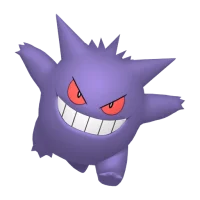
- 5 bonus stages: Diglett, Gengar, Meowth, Seel and Mewtwo.
- 4 balls: Poké Ball, Great Ball, Ultra Ball and Master Ball, which multiply points by 1, 2, 3 and 5.
- 3 balls per game, plus 10 extra balls at most.
- 5 high scores saved per table.
The team
The following names are those from the Japanese manual, as reported by Bulbapedia. Jupiter Corporation developed the game and Nintendo published it. Note that the “kernel program” is credited to Satoru Iwata, then president of HAL Laboratory and later president of Nintendo.
| Role | People |
|---|---|
| Producers | Tsunekazu Ishihara, Takehiro Izushi |
| Programming | Noriaki Teramoto, Daisuke Miyao |
| Design | Masaru Kuribayashi, Hiroyuki Gotō, Norichika Meguro |
| Graphics supervisor | Ken Sugimori |
| Music | Gō Ichinose |
| Sound effects | Morikazu Aoki |
| Sound driver | Tetsuya Watanabe |
| Sound direction | Junichi Masuda |
| Testing | Super Mario Club |
| Kernel program | Satoru Iwata |
| Original Pokémon story | Satoshi Tajiri |
| Executive producer | Hiroshi Yamauchi |
Reception and sales
In Japan, Famitsu scored the game 9, 8, 8 and 7 out of 10 (32 out of 40). GameSpot gave it 8.7 out of 10, and the aggregator GameRankings showed an 81.73% average. On July 21, 1999, Nintendo announced that Pokémon Pinball was the fastest-selling Game Boy game of the time, with 262,000 copies in twenty days. According to the Japanese organization CESA, as reported by Wikipedia, total sales reach approximately 5.31 million copies.
Useful references
The European version’s manual carries the reference DMG-VPHP-NEU6 and exists in six languages on the same cover, French included (“Mode d’emploi”). The box states that the on-screen text is available in English, German, Italian, French and Spanish. For the sequel, Pokémon Pinball: Ruby & Sapphire, see the dedicated page and the specific section of the site.