Shiny Pokémon (also called shinies) are rare Pokémon available in every Pokémon game since the second generation. Because they are so rare, they are extremely sought after by many Trainers, also known as Shiny Hunters.
 However, there are techniques that make it easier to encounter them in Pokémon X and Y. Find out more below!
- Quick access:
- Rare and shiny Pokémon
- Soft-resetting
- The Masuda Method
- The Poké Radar
- Fishing chains
- The Friend Safari
- Horde Encounters
- The Shiny Charm
- “Shiny Locks”
Rare and shiny Pokémon
 They have an alternate coloration across their whole body. In addition, stars sparkle around these Pokémon when you encounter them (hence the unofficial name “shiny” Pokémon). Beyond their coloration, what makes them interesting is above all their rarity: for every wild Pokémon you meet, there is now normally only a 1 in 4,096 chance that it will be shiny! That means your odds of getting one easily are very low… but they are still twice as high as in previous generations, where the odds were 1/8,192.
A shiny Pokémon is neither better nor weaker than any other Pokémon. Its stats, Nature and Abilities are random, just like any other Pokémon. However, it is not as good as a Pokémon that has been carefully chosen and raised to maximize its IVs and Nature, because shinies simply cannot be selected.
[ Remonter en haut ]
Soft-resetting
 This method is as old as the hills and rests on a very simple principle: since meeting a shiny Pokémon is rare, you simply keep encountering the same Pokémon over and over until it finally turns up shiny. This technique is common and is used mostly with Legendary Pokémon or gift Pokémon. Just save in front of the Pokémon or the Trainer giving it to you, check whether it is shiny, and restart your game (a “reset”) if it is not.
Each reset is independent: having just done 10,000 resets does not give you a better chance of getting a shiny on the next encounter than if you had just done your very first one. If you get a bit tired of it, feel free to do something else and start resetting again later.
[ Remonter en haut ]
The Masuda Method
This method has existed since Pokémon Diamond and Pearl and is named after the person who revealed it, the now very well-known Junichi Masuda. It is based on breeding Pokémon.
 To use this method, you need to leave two compatible Pokémon at the Pokémon Day Care, located at the end of Route 7. However, the two parent Pokémon must come from different countries. If so, the Pokémon that hatches from the resulting Egg has a much better chance of being shiny: 5 times higher in the fourth generation (1/1,638), and 6 times higher in the fifth (1/1,366). The probability in the sixth generation is close to 1/683 (1/512 with the Shiny Charm).
This method is now quite easy to carry out, especially as it is even easier to obtain foreign Pokémon thanks to the Wonder Trade and the Global Trade Station (GTS).
[ Remonter en haut ]
The Poké Radar
First introduced in the fourth generation, the Poké Radar returns in Pokémon X and Pokémon Y. You can get it on the 2nd floor of Professor Sycamore’s Lab in Lumiose City, once you have beaten the Pokémon League. The idea is to chain encounters with Pokémon of the same species: with each identical Pokémon you meet, the chance that the next one is shiny increases. Before you start, stock up on Max Repels, which are essential and must be used continuously to keep regular Pokémon away.
 The Poké Radar needs 50 steps to recharge. Go to a continuous patch of tall grass with no gaps in the middle, and activate the Poké Radar along with a Repel. Some tall grass will start to shake. You must then head into a patch of grass that moves quickly, as these are the ones that may contain the Pokémon you are trying to chain. If there are none, recharge the Poké Radar and try again. Ideally, then pick grass that is fairly far away, 4 or 5 tiles from you, but never at the edge of the patch of tall grass, as this could break your chain.
To continue the Pokémon’s chain, knock out or catch the Pokémon in question during encounters; do not run away. Then reactivate the Poké Radar and keep going. In the sixth-generation games, if a shiny Pokémon is hiding in the tall grass, its location will sparkle when you activate the Poké Radar. Once you have encountered the shiny Pokémon… catch it!
If you keep meeting the same Pokémon in a row without interruption, the probability that the next Pokémon of the same species is shiny will keep increasing. At most, it reaches 0.5% (1/200), which happens from a chain of 40 Pokémon or more. This probability remains far higher than with the previous methods!
[ Remonter en haut ]
Fishing chains
This is a new method that appeared in Pokémon X and Y. Somewhat similar to the Poké Radar, it involves building chains by fishing.
 This method also has the advantage of being fairly simple in theory: get an Old Rod, Good Rod or Super Rod, head to a patch of water and fish. The more consecutive catches you make without failing, the higher the probability that the next Pokémon is shiny!
Unlike the Poké Radar, the Pokémon do not need to be the same species, and you do not even need to battle each Pokémon you encounter. In practice, this method is not necessarily that simple and can take quite a while until you have enough fishing experience.
A little tip: put a Pokémon with the Glue or Ventouse Ability at the front of your team. They increase the number of Pokémon encountered per fishing attempt.
[ Remonter en haut ]
The Friend Safari
 A major new feature of this 6th generation, the Friend Safari is located in Anistar City after the Pokémon League. It gives players access to more or less rare Pokémon while making use of connectivity, and therefore everyone’s 3DS Friend Codes. To access a park, you need a confirmed friend, meaning someone whose invitation you have accepted. From that point on, you can access the safari under your friend’s name.
On top of the many advantages regarding Pokémon IVs and Abilities, the Friend Safari lowers the difficulty of finding a shiny so much that it could almost become “commonplace”. Indeed, the probability of encountering a shiny is estimated at around 1/512 (and cannot be improved with the Shiny Charm). Seen as a negative by some and an advantage by others, the Safari has been the subject of much controversy regarding the rarity of shinies in Pokémon X and Pokémon Y.
For more information on the Friend Safari, see our dedicated article:
> The Friend Safari!
[ Remonter en haut ]
Horde Encounters
 By definition, Horde Encounters involve several wild Pokémon in the same battle, five in this case. Most often of the same species, the Pokémon in hordes let shiny hunters multiply their chance of finding a shiny Pokémon by five.
The probability of meeting a shiny Pokémon then goes from 1/4,096 for a single wild Pokémon to 1/819 for a horde, which is very interesting. But be careful: you can only catch the Pokémon once the other four have been defeated.
Finally, using the Honey item and the move Sweet Scent will give you an automatic Horde Encounter, although one can also occur without them, with a much lower chance.
For more information on Horde Encounters, see our dedicated article:
> Pokémon Horde Encounters!
[ Remonter en haut ]
The Shiny Charm
A highly coveted item since its debut in the previous generation, the Shiny Charm drastically increases your chances of encountering shiny Pokémon. You get it from Professor Sycamore once you have caught every Pokémon in the National Pokédex (except Mythical Pokémon available only through events).
This rare item makes it easier to encounter shiny Pokémon. The odds rise as follows:
- for “regular” wild Pokémon: the encounter rate is tripled, from 1/4,096 to 1/1,366.
- for the Masuda Method: the rate is also improved, from roughly 1/683 to 1/512.
Thanks to the higher shiny rate for wild Pokémon, your chances of encountering shinies are also improved for the other methods. The only method not affected is the Friend Safari, which is already very rewarding with its base rate of 1/512!
[ Remonter en haut ]
“Shiny Locks”
Literally, a “shiny lock” is a block that prevents certain Pokémon from being obtained naturally as shinies. Starting notably with the fifth generation, Game Freak made this principle widespread for certain Pokémon, particularly Legendary ones. In Pokémon X and Pokémon Y, all the Legendary Pokémon you encounter in the game are subject to this system: Xerneas, Yveltal, Zygarde, but also Artikodin, Electhor, Sulfura and Mewtwo.
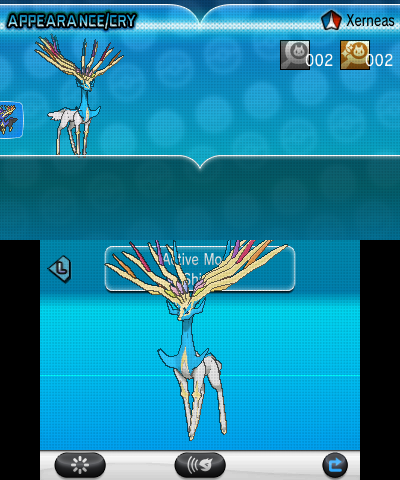
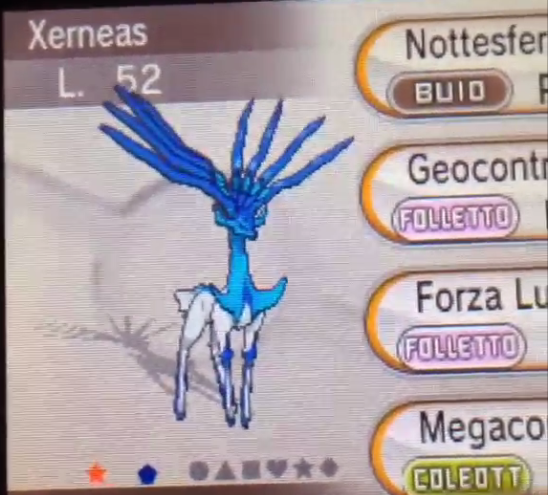
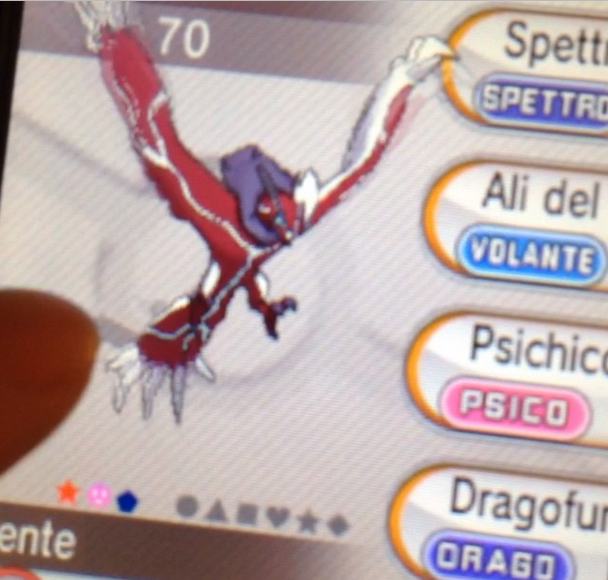
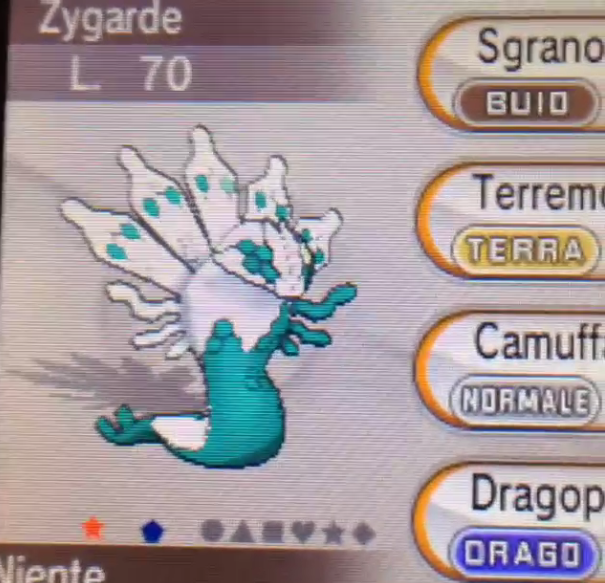
Therefore, given that they were absent from previous versions, it is currently impossible to get a shiny Xerneas, Yveltal or Zygarde without cheating, no matter how many resets you do! Trading them online (non-local) has also been blocked.
[ Remonter en haut ]
Has your shiny hunt gone well? Feel free to come and talk about your catches on the Pokémon-France Forums, where a topic is dedicated to the feats of your shiny hunts: Shiny Pokémon topic.