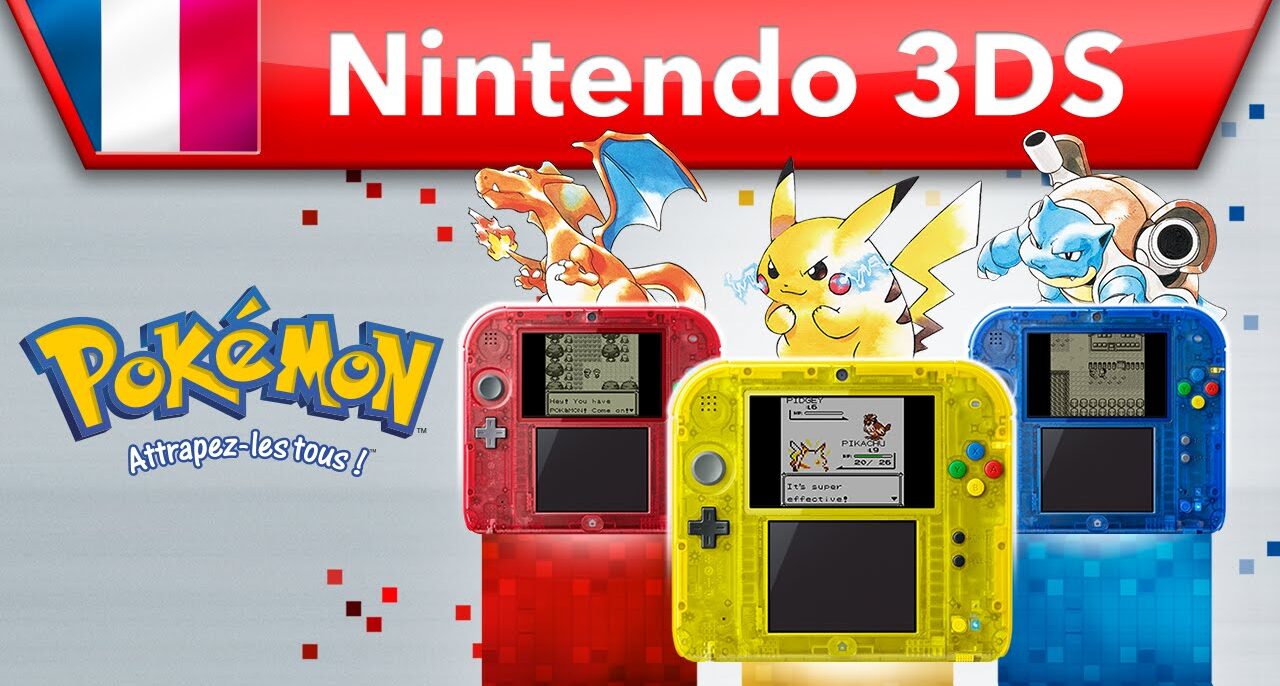
In the autumn of 1998 in Japan, then at the turn of 2000 in Europe, the Pokémon wave was about to hit a decisive milestone. While Red and Blue were smashing sales records on the original Game Boy and Kunihiko Yuyama’s anime captivated millions of kids every Wednesday morning in front of the TV, Nintendo and Game Freak orchestrated an editorial masterstroke: the release of Pokémon Yellow Version: Special Pikachu Edition.
Far from being a simple opportunistic re-release, Yellow Version remains to this day one of the most memorable games in the entire history of the franchise. For the first time in the video game industry, a game adapted itself directly to the codes of its animated counterpart, revolutionizing along the way the emotional bond between the player and their starter. A look back at a masterpiece of friendliness, technical ingenuity and pure nostalgia that laid the foundations of the modern Pokémon formula.
From the cathode-ray screen to the Game Boy: an express adaptation
When Game Freak finished developing Red and Green in 1996, nobody at Nintendo imagined the sheer scale of the media phenomenon that was about to follow. The lightning-fast triumph of the anime, launched in April 1997, immediately propelled  Pikachu to the rank of global icon, almost eclipsing the three traditional starters. Millions of young players arriving on Game Boy demanded the same adventure as Ash from Pallet Town: starting out with an unruly electric mouse that refuses to go into its Poké Ball.
Satoshi Tajiri and his teams rose to the challenge in record time. In Yellow Version, Professor Oak no longer lets you choose your starting creature: your rival inherits an  Eevee (which will evolve into
 Vaporeon,
 Jolteon or
 Flareon depending on the outcome of your successive battles), while you are entrusted with a strong-willed Pikachu. The game faithfully rewrites the memorable encounters of the TV series: Jessie and James of Team Rocket burst in with their inseparable talking Meowth, and Gym Leaders such as Brock and Misty wear their cartoon outfits and field their cartoon teams.
The following Pikachu and the mood system: the ancestor of friendliness
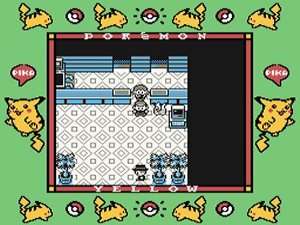
The most revolutionary innovation of Yellow Version lies in a detail that moved generations of children: for the first time, a Pokémon physically walks behind the Trainer on the overworld map. By turning toward Pikachu and pressing the A button, an animation window opens to reveal your companion’s emotional state.
Game Freak programmed a genuine invisible friendship algorithm: at the start of the adventure, Pikachu watches you with distrust or indifference. But as you progress without letting it faint, heal it with Potions and win Gym Badges, its affection meter climbs sharply. Sparkling hearts burst above its head, it breaks into joyful dances, yawns with tiredness or gets annoyed at certain opponents. This founding mechanic would directly inspire Pokémon Café, Pokémon-Amie in Gen 6, and the very idea of a walking companion that returned years later in Pokémon Gold / HeartGold and Silver / SoulSilver and in Pokémon GO.
The starters reunited: every Trainer’s dream come true
In Red and Blue, obtaining all of the starting creatures was a headache that necessarily required Link Cable trades with school friends. Yellow Version breaks free of that constraint by letting Trainers adopt the three original starters during their journey, exactly like Ash in the first season of the series:
 Bulbasaur: Given by a young girl in Cerulean City if your Pikachu shows a high level of affection toward you.
 Charmander: Given by a dejected Trainer on Route 24 above Nugget Bridge, a direct tribute to the poignant episode in which Charmander is abandoned in the rain.
 Squirtle: Handed over by the police officer in Vermilion City after you have dealt with the town’s troublemakers, echoing the Squirtle Squad.
Putting together a team of Pikachu, Venusaur, Charizard and Blastoise without any tricks finally became a reality within reach of every cartridge owner.
Surfing Pikachu and the Game Boy Color: the technical tour de force
Released at the hinge between two generations of handheld consoles, Pokémon Yellow Version also served as a technological showcase for the new Game Boy Color. Although the game remains compatible with the original Game Boy, inserting the cartridge into the color model unlocks custom color palettes town by town (Cerulean City is displayed in sky blue, Saffron City in golden yellow, Celadon City in leaf green).
The other stroke of genius was the famous secret mini-game Pikachu’s Beach, located in an isolated hut on the beach of Route 19. To access it, players had to connect their cartridge to the Nintendo 64 game Pokémon Stadium via the Transfer Pak so that their Pikachu could learn the move Surf. The game then switched to a miniature arcade game in which Pikachu surfed the waves, performing acrobatic tricks to rack up score points, demonstrating a visionary hardware interconnection for the year 1999.
A living legacy: how Yellow Version shaped the saga
More than twenty-five years after its release, the impact of Pokémon Yellow Version still runs through Game Freak’s modern productions. In 2018, Yellow Version was chosen as the founding blueprint for Pokémon: Let’s Go, Pikachu! and Let’s Go, Eevee! on Nintendo Switch, reintroducing catching without wild battles and the deep attachment to a shoulder-riding starter.
Yellow Version showed that a Pokémon game is not just a strategy simulator or a collection of numerical data: above all, it is the story of a close friendship between a child and their first pocket monster. A timeless magic that players aged 25 to 34 still cherish with the same intact emotion as on day one.
Official sources: Nintendo France, Game Freak Archives, Iwata Asks: Pokémon Yellow Version and Pokémon Stadium.