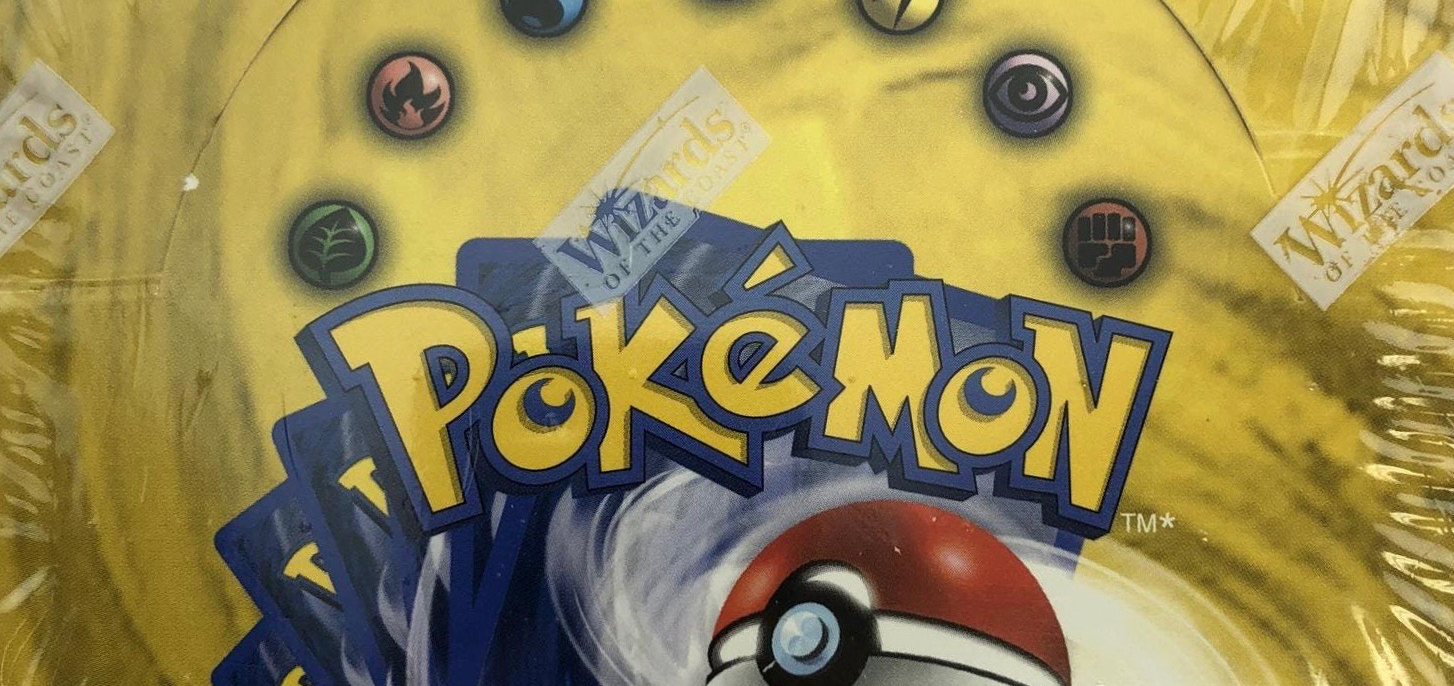
For millions of fans who were between 8 and 12 years old in the late 1990s, the childhood binder with its clear sleeves holds far more than pieces of cardboard: it keeps fond memories of the playground, the unmistakable smell of freshly opened booster packs and the thrill of spotting a shiny holographic card. Released in France in November 1999 after conquering Japan and the United States, the Base Set of the Pokémon Trading Card Game remains to this day the most legendary expansion in the entire history of the franchise.
Yet today, with vintage cards reaching new heights on the collector market and plenty of fakes flooding flea markets and peer-to-peer selling platforms, knowing how to authenticate your own cards has become an essential skill. How do you tell a French 1st Edition card from an American “Shadowless” print and an Unlimited version? How do you spot modern counterfeits in a few seconds? Follow our complete guide to appraise your collection like a professional.
The four historic Base Set print runs of 1999, explained
When Wizards of the Coast launched the Base Set in the West, several successive print runs appeared between 1999 and 2000. To understand how rare a card is, you need to tell these four specific print runs apart:
- 1. The 1st Edition print run: Printed in very limited quantities at the initial launch. Every card bears the famous black circular “1st Edition” stamp (or “1re Édition” in French), located on the left of the card, just below the illustration and above the evolution line. In English, this print run is always free of any shadow beneath the frame (Shadowless). French 1st Edition cards, however, do have a drop shadow under the frame, because the French edition was printed from Wizards’ corrected graphic template.
- 2. The “Shadowless” print run (exclusive to English cards): Once the 1st Edition print run sold out, Wizards of the Coast reprinted cards by simply removing the 1st Edition stamp while keeping the original shadowless layout. These cards are much rarer than later print runs and make up a highly sought-after collecting category.
- 3. The Unlimited print run (Edition 2 / standard print run): The most widespread print run worldwide, which flooded playgrounds in 1999 and 2000. It no longer carries the 1st Edition stamp and shows a clearly visible dark shadow below the right side and bottom of the illustration’s golden frame. The font used for hit points (HP) is also bolder.
- 4. The 4th Print run (1999-2000): Printed in the United Kingdom at the end of 2000 to address the shortage on the European market. It can be identified by the copyright line at the very bottom of the card, which explicitly reads “©1999-2000 Wizards” instead of “©1995, 96, 98, 99 Wizards”.
The drop shadow rule: understanding the “Shadowless” print run
The term Shadowless often puzzles uninformed collectors. To tell at a glance whether an English card belongs to this category, simply look at the rectangular golden frame surrounding the Pokémon’s artwork. On a standard card known as Unlimited, the right side and the bottom edge of this frame cast a dark drop shadow that gives a three-dimensional, raised effect. On a Shadowless card, this shadow simply does not exist: the transition between the golden frame and the colored background is completely flat and direct.
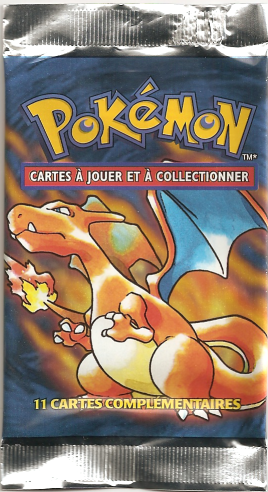
Besides the missing shadow, Shadowless cards stand out through other very clear typographic markers: the hit points (e.g. “120 HP” for  Charizard) use a thinner, more slender font, and the copyright line at the bottom of the card shows the year 1999 twice (“1995, 96, 98, 99 Nintendo, Creatures, GAMEFREAK. ©1999 Wizards”), whereas the Unlimited print run omits the year 99 at the start of the copyright.
The cult printing errors and the most sought-after cards
The Base Set is famous for hosting several well-known printing errors that send international auctions into a frenzy:
- Red Cheeks Pikachu: Drawn by Mitsuhiro Arita, the
 Pikachu card number 58/102 originally showed the Electric Mouse with yellow cheeks to illustrate its sparks. At Wizards’ request, some printing sheets were changed to red cheeks, creating a rare and highly sought-after variant in 1st Edition and Shadowless.
- Shadowless Charizard: The undisputed queen of pop culture, the holographic Charizard 4/102 in 1st Edition Shadowless remains the ultimate Holy Grail, reaching several tens or even hundreds of thousands of euros depending on its condition as certified by PSA, BGS or CGC.
- No Stage Blastoise: A rare error that occurred on some
 Blastoise cards, where the word “Stage 2” was omitted in the top right above the illustration.
- Diglett with a rotated energy symbol: On Diglett’s first attack, the Fighting Energy symbol appears tilted by 90 degrees on the very first print runs.
- The other two starters: Alongside the fire-breathing dragon, the holographic cards of
 Venusaur (15/102) and the genetic clone
 Mewtwo (10/102) rank among the most coveted centerpieces for nostalgic collectors.
The anti-counterfeit protocol: spotting fake cards in 5 steps
The explosion of interest in the Base Set has unfortunately fueled the production of ever more sophisticated counterfeits. To avoid being fooled when buying, or to check the contents of an old binder found in an attic, follow this five-step protocol carefully:
- 1. The black core test: Authentic Pokémon cards produced by Wizards of the Coast and The Pokémon Company are made of three layers of paper glued under pressure, including a thin opaque black layer in the middle. When you examine the edge of the card with a magnifying glass in good light, you should be able to make out this thin dark line in the center. Cheap fake cards use a single-layer white or gray cardboard.
- 2. The holo pattern: The 1999 Base Set hologram is made up of small stars and sparkling dots (the so-called “Galaxy Holo” or “Starlight Holo” pattern). If the shiny effect covers the entire card (text included) or shows a uniform diagonal rainbow reflection without distinct stars, it is invariably a counterfeit.
- 3. The sharpness of the typography: On an authentic card, the black text is printed with pure black ink on a dedicated layer, giving razor-sharp outlines. Scanned counterfeits print the letters in CMYK four-color process: under a magnifying glass, the edges of the letters look blurry, smudged or made up of tiny colored dots.
- 4. The back of the card: The back of an original Pokémon card has been perfectly consistent since 1996. The midnight blue must be deep, the central Poké Ball shows precise highlights, and the word “Pokémon” has a bright yellow with no greenish drift or washed-out look.
- 5. The light transparency test: When you place a smartphone flash directly behind the card, it should block almost all of the light thanks to its black central core. If the glow passes through the card and lets you read the text through it, the card is fake.
A practical grading guide for estimating your childhood binder
Just got your old cards back in your hands? Before considering a sale or grading, here are the objective criteria to keep in mind when assessing their value:
- Wear and condition outweigh everything else: A damaged, creased or scratched 1st Edition Charizard card will see its value divided by ten or twenty compared with a copy kept in a sleeve (Near Mint or Mint). Collectors hunt for the slightest white marks on the edges of the back (whitening) and micro-scratches on the holographic foil.
- The print language: English and Japanese versions benefit from an extremely liquid worldwide market. French 1st Edition versions command a particularly high price on the French-speaking market because of much smaller initial print runs than in the United States.
- Non-holographic cards: Non-holographic Common, Uncommon and Rare cards from the Base Set keep a modest value in the Unlimited print run (often between €0.50 and €5 depending on the species), but can be worth between €15 and €80 each in mint condition in French 1st Edition or Shadowless.
- The essential protection: If you own Base Set holographic cards, immediately place them in a snug soft inner sleeve (penny sleeve), then in a rigid card protector (toploader) or a side-loading binder without metal rings to stop any deterioration in its tracks.
Key takeaways
The 1999 Base Set remains the founding monument of the Pokémon Trading Card Game. Whether it is a French 1st Edition card, an American Shadowless copy or an Unlimited print steeped in history, every card tells the story of the beginnings of an unparalleled cultural phenomenon. Take the time to examine your cards under a magnifying glass: you may uncover unsuspected treasures that deserve to be carefully protected for decades to come.
Source: The Pokémon Company International / Pokémon TCG Archives