
All it took was a cousin, an older kid from the top grade, or a friend “who knew someone at Nintendo”: on the playground in 1999-2000, everyone knew that  Mew was hiding under the truck in Vermilion City. Nobody had ever seen it, but everybody believed it. Here’s a look back at the urban legends that came with Pokémon’s arrival in France, with the true, the false and what remains of each today.
On October 8, 1999, Pokémon Red and Blue landed in France. No wiki, no YouTube, hardly any Internet at home: the game’s secrets spread by word of mouth, in school yards, in magazines and on early forums. That breeding ground grew stubborn rumors, some of which ended up being picked up… by the games themselves.
Mew under the truck: the mother of all rumors
In the port of Vermilion City, next to the S.S. Anne’s dock, sits a white truck. It serves no purpose, no character mentions it, and it’s almost impossible to get a close look at it. That was all it took to make it the most mysterious spot in Kanto. The most widespread version of the rumor said that by using Strength to push the truck, you would find a Poké Ball containing Mew, the famous 151st Pokémon that the Pokédex refused to show.
The truck is only reachable under very particular conditions: the dock disappears as soon as the S.S. Anne has set sail, and you need Surf to reach it. The most determined players still managed it by bypassing the storyline, for example by skipping the boat thanks to a Pokémon that knows Cut, obtained through a trade. What they found there… was a truck. Impossible to move, and nothing underneath.
Game Freak never forgot this story. In Pokémon FireRed and LeafGreen (2004), the truck is still there, and searching the dock turns up a hidden item: a Lava Cookie. In Pokémon: Let’s Go, Pikachu! and Let’s Go, Eevee! (2018), the same spot hides a Revive that reappears every day. Still no Mew, but a deliberate wink to the day-one players.
The circle was closed the same year in Pokémon GO: when a Special Research story let players get Mew for the first time in the mobile game in late March 2018, many Trainers had fun photographing their Mew in augmented reality… under real trucks.
Verdict: false. Mew was never under the truck, neither in 1996 in Japan nor in 1999 in France. But the rumor has become an official inside joke.
Mew, the Pokémon that should never have existed
The rumor grew so big partly because Mew really was hidden in the cartridge, and its story is almost as incredible as the legend. In an “Iwata Asks” interview about Pokémon HeartGold and SoulSilver, programmer Shigeki Morimoto says he added it “at the very end” of the development of Pokémon Red and Green, once the debugging tools had been removed: only about 300 bytes were left free, just enough to slip in one more Pokémon. Tsunekazu Ishihara points out along the way that it was strictly forbidden to change even a single bit once debugging was over.
Mew was supposed to remain a secret. But in April 1996, the Japanese magazine CoroCoro Comic launched a campaign to give it to 20 winners, who had to mail in their cartridge to receive the mythical Pokémon. About 78,000 people took part, and the people in charge at the time, Satoru Iwata first among them, acknowledged that this campaign had revived sales of the games. The Pokémon hidden in a corner of memory became the series’ first great mystery, and indirectly the genetic cousin of  Mewtwo, whose creation is told in the diaries found in the Pokémon Mansion on Cinnabar Island.
There actually was a way to catch Mew without an official event: the Trainer-Fly glitch, popularized in 2003. By escaping a Trainer’s line of sight using Teleport or Fly, then battling a specific opponent (for example the  Slowpoke of a Youngster on Route 25), the game spawns a wild Pokémon whose species depends on the last opponent’s Special stat. With the right value, Mew pops up. It’s a manipulation far too complex to be guessed on the playground, but it proves there really was a secret, just not where people were looking.
Verdict: true. Mew really was hidden in the game, added on the sly at the last minute. You simply needed an official event (or a very precise glitch) to get it.
“Pikablu,” the Pokémon everyone had “seen”
Another great classic: “Pikablu,” a sort of  Pikachu that was blue, supposedly hidden in the game or reserved for a future version. This time, the rumor was based on a real image. In the short film Pikachu’s Summer Vacation, shown in Japanese cinemas on July 18, 1998 before the first movie (and on April 5, 2000 in France), a small, perfectly round blue mouse appears, with a tail ending in a ball. No game contained it yet: that was all it took to invent a name, moves and even an evolution for it.
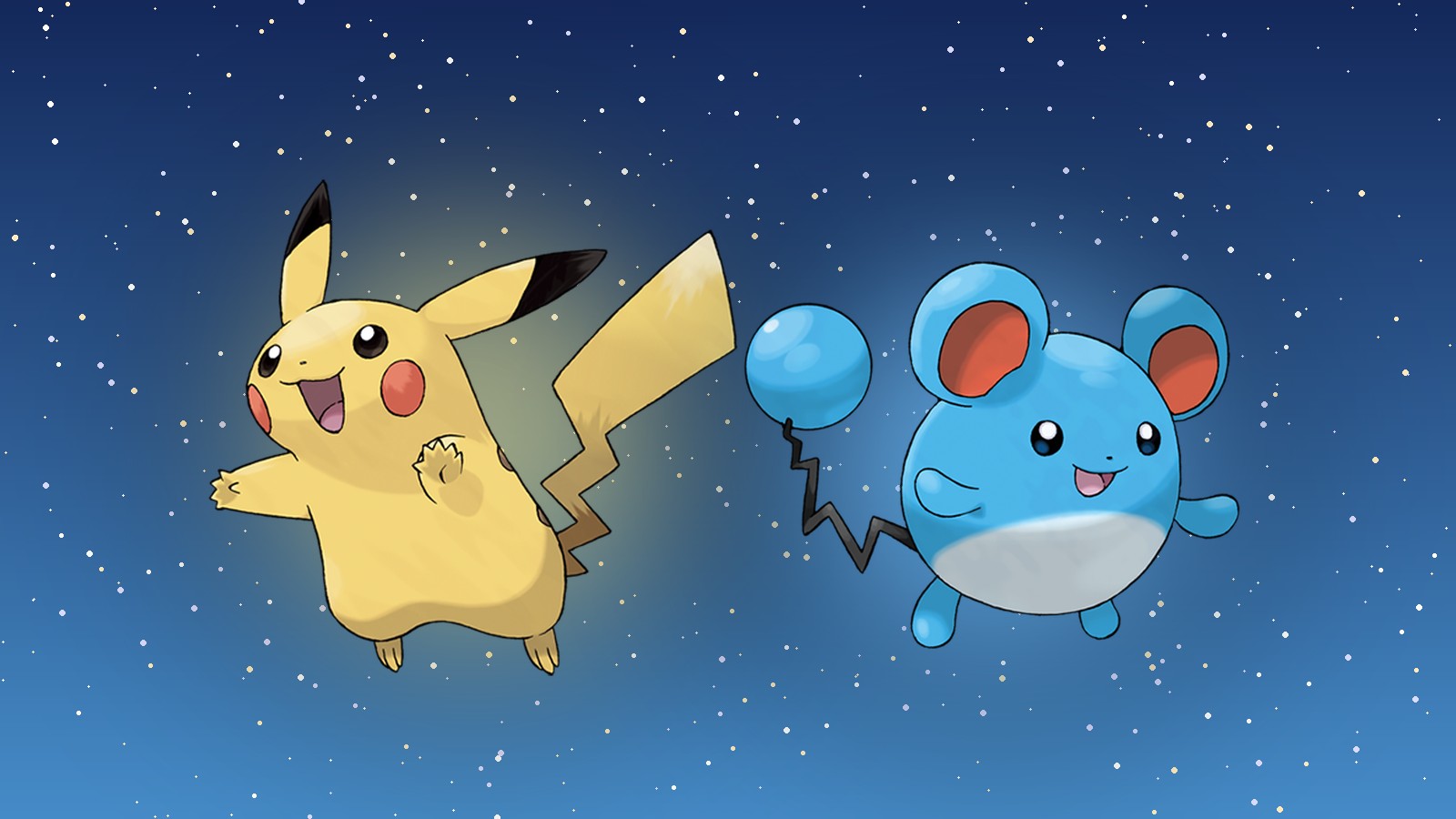
The mystery was solved with Pokémon Gold and Silver (November 1999 in Japan, April 2001 in France): the creature was called  Marill, a Water-type Pokémon (then Water and Fairy from the sixth generation onward), with no family relation to Pikachu whatsoever. The short film simply served as a showcase for several Pokémon of the next generation, such as Marill and Snubbull.
Verdict: half true. The blue Pokémon did exist and had indeed been shown officially, but it was neither a Pikachu nor a secret of Pokémon Red and Blue.
Lavender Town, the town that scared everyone
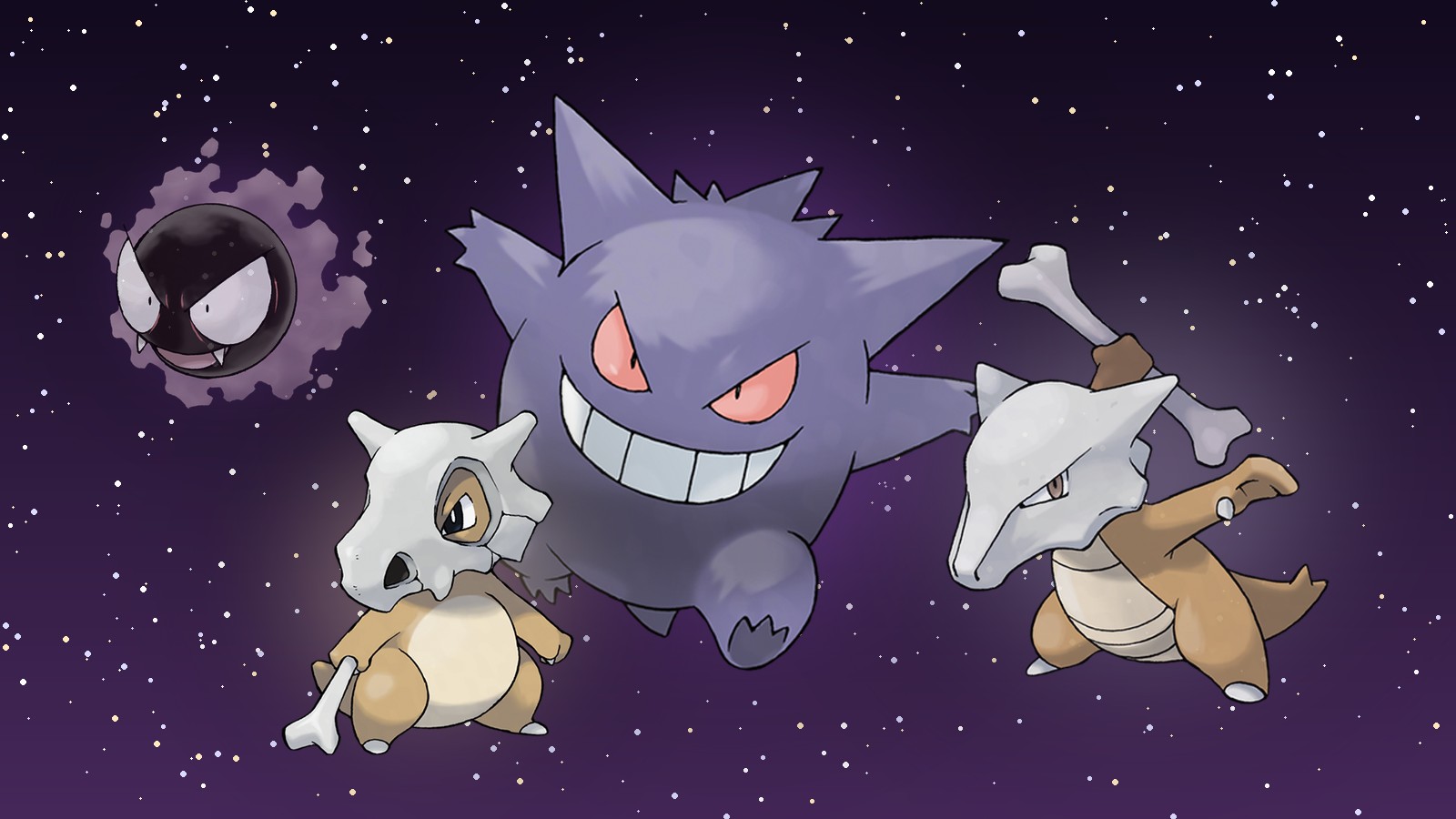
With its haunting music, its Pokémon Tower full of graves and its possessed Channelers, Lavender Town was already unsettling for an eight-year-old. Part of the legend is perfectly true, by the way: at the top of the Tower, a ghost blocks the way and only reveals itself with the Silph Scope. It is the ghost of a  Marowak, the mother of a
 Cubone, killed by Team Rocket. It’s a surprisingly dark story for an all-ages game, and one that left a big mark on players.
The rest is fiction. The famous “Lavender Town Syndrome” is a creepypasta published on Pastebin on February 21, 2010, written like a fake news article. It claims that the music of the 1996 Japanese version contained dangerous frequencies, responsible for a series of illnesses among children. No real fact has ever backed up this tale, which appeared almost fifteen years after the game’s release, but it still circulates regularly on social media.
Lavender Town has also fed big fan theories, never confirmed by Game Freak: Cubone would be an orphaned baby  Kangaskhan, and
 Gengar would be the shadow of
 Clefairy, the two Pokémon having silhouettes and weights that echo each other. Fun ideas, but they remain a matter of interpretation. As for
 Gastly, it still haunts the Tower, version after version.
Verdict: half true. The Marowak ghost is indeed in the game, but Lavender Town Syndrome is a hoax born on the Internet in 2010.
MissingNo., Professor Oak and the glitches that became myths
Some “legends” were actually very real glitches. The most famous is MissingNo., a corrupted Pokémon you could encounter in the American version by surfing along the coast of Cinnabar Island after a precise manipulation. Encountering it added 128 copies of the sixth item in your inventory, enough to multiply Rare Candies or Master Balls, at the price of corrupted graphics and a sometimes damaged Hall of Fame. Nintendo of America eventually mentioned it officially in the May 1999 issue of Nintendo Power magazine. The French versions behave differently: the classic method generally results in a black screen, which made MissingNo. almost mythical in France.
Another very real secret: Professor Oak has a full team hidden in the game’s data, with  Tauros,
 Exeggutor,
 Arcanine,
 Gyarados and the final evolution of one of the three starter Pokémon. It isn’t possible to battle him normally, but some glitches, such as the
 Ditto glitch, make it possible to challenge him. The playground rumors claiming you could “battle Prof. Oak after the League” therefore had a grain of truth, even if nobody really knew how.
Verdict: true. MissingNo. and Professor Oak’s team do exist, but they are glitches and unused data, not secrets planned by the developers.
Why we all believed it
These legends thrived because Pokémon Red and Blue promised a world full of secrets, and really did contain some. Mew proved that a Pokémon could be hidden in the game without anyone knowing. Magazines published unverifiable tips, codes and glitches circulated on fledgling forums, and every school yard had its self-proclaimed expert. In that context, an unreachable truck was bound to look suspicious.
More than twenty-five years later, these stories are part of Pokémon culture just as much as the games are. And to go check for yourself what the Vermilion City dock is hiding, Pokémon FireRed and LeafGreen are now playable on Nintendo Switch.
Key takeaways
- Mew under the truck: false. FireRed and LeafGreen hide a Lava Cookie there, Let’s Go Pikachu and Eevee a Revive.
- Mew hidden in the game: true, added at the last minute in about 300 free bytes, then distributed in Japan as early as 1996.
- Pikablu: half true. It was Marill, glimpsed in Pikachu’s Summer Vacation before the release of Gold and Silver.
- Lavender Town Syndrome: false, a creepypasta from 2010. The Marowak ghost, however, is very real.
- MissingNo. and Professor Oak’s team: true, but they are glitches and unused data.
And you, which Pokémon rumor did you believe the longest? Tell us your playground memories in the comments.
Source: Nintendo, Iwata Asks: Pokémon HeartGold and SoulSilver; the official Pokémon channel in French; cross-checked with Poképédia and Bulbapedia.