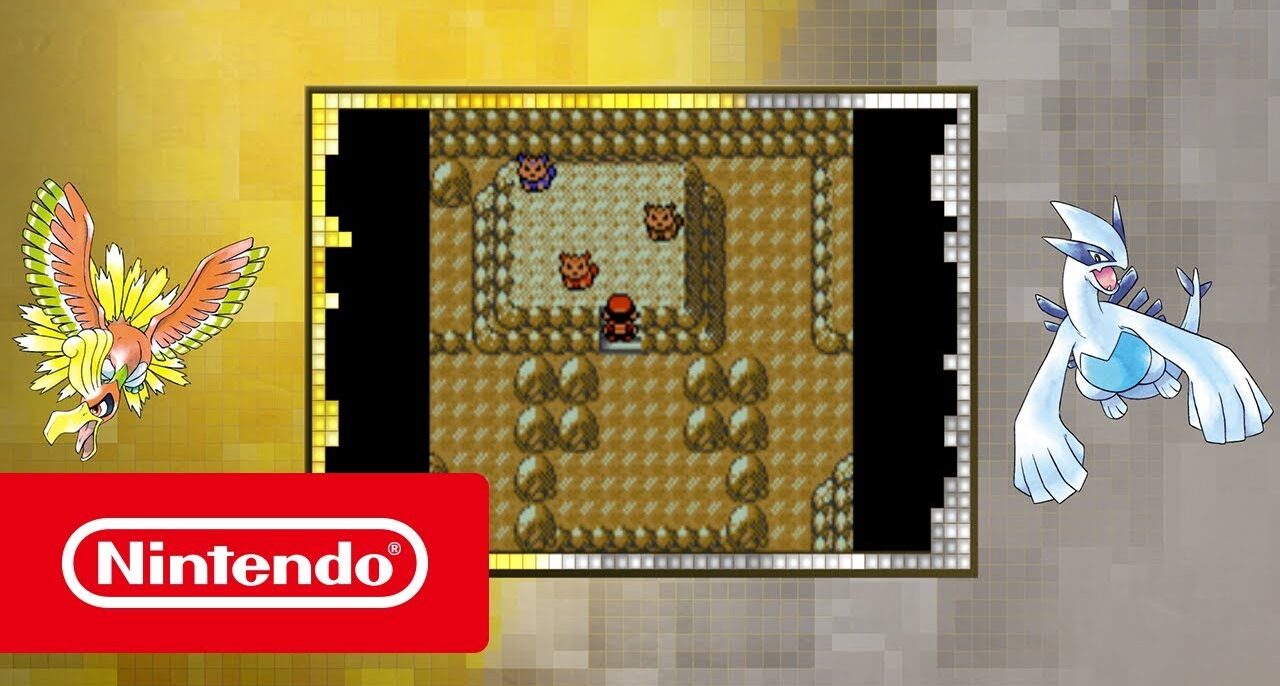
Released in autumn 1999 in Japan and in 2001 in Europe on the Game Boy Color, Pokémon Gold Version and Pokémon Silver Version remain etched in memory as one of the greatest masterpieces in video game history. But behind the wonder of exploring two complete regions and catching  Ho-Oh or
 Lugia lies one of the most chaotic developments in Nintendo’s history. A persistent urban legend credits the appearance of Kanto to a miraculous compression routine that Satoru Iwata supposedly programmed in a few nights: let’s go behind the scenes of a very real technical feat that is often misunderstood.
The 1998 deadlock: Game Freak caught in the trap of its own triumph
When Pokémon Green and Pokémon Red arrived on the Game Boy in Japan in February 1996, nobody at Game Freak anticipated the worldwide tidal wave that was about to break. Within a few months, the small independent company founded by Satoshi Tajiri found itself at the center of everyone’s attention. To honor players’ enthusiasm, the studio immediately committed to a very ambitious sequel, provisionally titled Pocket Monsters 2. At the Nintendo Spaceworld show in November 1997, a first playable version was already shown to the public: the project revealed an immense territory covering all of Japan, dozens of brand-new creatures and a promised release in March 1998.
Behind the scenes, however, Game Freak was going through an unprecedented crisis. The team then counted only a handful of permanent developers, among them Ken Sugimori, Junichi Masuda and Shigeki Morimoto. Instead of being able to focus exclusively on this sequel, the programmers had to put out countless fires: fixing the bugs of the original versions, designing Pokémon Yellow Version to ride the triumphant success of the animated series led by  Pikachu, overseeing the manufacturing of spin-off merchandise and kicking off the Western adaptation of the games. Completely overwhelmed, the team saw the development of Pokémon Gold and Silver bog down until work came to an almost total halt during 1998.
Tsunekazu Ishihara, then president of Creatures Inc. and future head of The Pokémon Company, understood that the studio was heading straight for a wall. Faced with this organizational and technical bottleneck, he decided to call on an exceptional outsider: Satoru Iwata, then the young president of HAL Laboratory, renowned for his kindness and his absolute genius for programming.
Satoru Iwata steps in: Nintendo’s top-tier firefighter
Before even laying eyes on the Johto source code, Satoru Iwata performed a first miracle that sealed trust between the teams. Nintendo was eager to bring the creatures to the Nintendo 64 with Pokémon Stadium. With no staff to spare for this project and no formal technical documentation of the Game Boy battle engine, Game Freak had nothing to offer, so Iwata took the bull by the horns. In the space of a single week, he dove straight into the source code of Red and Green, fully reverse-engineered it, and rewrote the entire battle system in the C language for the home console’s 64-bit architecture. Shigeki Morimoto himself would later confess his total disbelief at such an intellectual feat.
Buoyed by this achievement, Satoru Iwata then tackled the titanic job of the international localization of Red and Blue. To adapt the Japanese text to Western languages (which need far more characters per line and a reworked memory layout), he designed custom analysis and conversion tools. It is this behind-the-scenes work that allowed American and then European players to discover Kanto, to wake a sleeping  Snorlax on the road and to challenge the fearsome
 Mewtwo in the Unknown Dungeon.
At the end of 1998, Iwata officially took on the role of production coordinator for Pokémon Gold and Silver. He freed Satoshi Tajiri and his creative staff from thankless management tasks so they could refocus on game design. But on the technical side, a major challenge remained: the game engine suffered from heavy stuttering, and the time needed to decompress graphics threatened the overall smoothness of the experience.
The myth of magic compression versus technical reality
For two decades, fan forums and social networks have peddled a romanticized version of the story: the Game Boy cartridge was supposedly so saturated by the Johto region that Iwata coded a super-powerful compression routine, miraculously freeing half the memory to fit in Kanto. Retrospective analysis of the data and statements from the developers reveal a far more nuanced truth, but one that is just as fascinating.
Satoru Iwata did indeed develop a custom decompression algorithm for Pokémon Gold and Silver, drawing on techniques he had already perfected at HAL Laboratory on Mother 2 (EarthBound). However, this tool was not designed to reduce file sizes on the cartridge, but to optimize the processor’s computing speed. Originally, decoding the sprites of the monsters and backgrounds considerably slowed down menu scrolling, the display of dialogue and battle transitions. By reprogramming these routines in pure assembly, Iwata allowed the Game Boy’s Z80 processor to decompress images on the fly in a fraction of a second.
To gauge the scale of the technical choices made during this development, here is a comparison of the actual specifications between the first two generations:
- Base cartridge capacity: 512 KB (4 Mbit) for Pokémon Red and Blue, increased to 1 MB (8 Mbit) with an MBC3 chip for Pokémon Gold and Silver.
- Iwata’s graphics algorithm: Optimization of processor execution speed (roughly 20 to 30% faster), with no significant gain in raw storage.
- Development period: Nearly three and a half years (from mid-1996 to November 1999), an absolute record for the franchise at the time.
- Explorable regions: 2 interconnected regions (Johto, then Kanto), totaling 16 Gym Badges and 251 creatures catalogued in the Pokédex.
So Kanto could be included not thanks to some magical reduction of data size by Iwata, but thanks to the hardware decision to move to a 1 MB cartridge, combined with the phenomenal talent for streamlining shown by Game Freak’s designers.
The return to Kanto: a masterpiece of streamlining and nostalgia
Having extra space on the cartridge was not enough: the sixteen cities of Kanto still had to be made to fit alongside an already particularly dense Johto, with its ancient ruins, its sacred towers and the lair of the famous red  Gyarados at the Lake of Rage. This is where Game Freak’s genius comes into play.
To fit the home region in three years after the events of Red and Blue, the developers made surgical cuts. Viridian Forest and the Safari Zone are temporarily closed to the public, the Rock Tunnel is shortened, the Power Plant has been refurbished to power the Magnet Train, and Cinnabar Island has been devastated by a volcanic eruption, forcing Blaine to set up his makeshift Gym in the Seafoam Islands. By cleverly reusing the same graphic tile patterns (tilesets) and simplifying the geometry of the routes, the team managed to squeeze the whole old world into the leftover memory.
The result goes beyond mere engineering prowess to become an anthology moment in gaming. Boarding the S.S. Aqua in Olivine City or taking the Magnet Train in Goldenrod City, players discovered with astonishment that their quest was far from over. Challenging the eight original Gym Leaders again, finding a Kanto transformed by time and climbing Mt. Silver to face Red at the summit in a silent duel in the snow remains one of the most masterful surprises ever offered to players.
Key takeaways
While the legend of Iwata’s miracle compression belongs to internet folklore, the historical reality is even more admirable. Without Satoru Iwata stepping in to stabilize the tools, speed up the engine and take over project management, Pokémon Gold and Silver would probably never have seen the light of day in this form. Combined with Game Freak’s mastery in optimizing every byte of Kanto, this rescue gave birth to one of the undisputed peaks of the franchise, enriched shortly afterward by the crowning of  Suicune in Pokémon Crystal Version. To extend your dive back into the early history of the saga, also check out our feature on 27 years of Pokémon Red and Blue as well as the complete walkthrough in our Red and Blue mini-site.
Source: Nintendo (Iwata Asks archives: Pokémon HeartGold Version and Pokémon SoulSilver Version)