
In Pokémon GO, you don’t power up a Pokémon by battling, but by spending two resources: Candy, specific to each Pokémon family, and Stardust, shared by all. Managing them well is the key to a solid team without waste.
Earning Candy
Candy for a family ( Charmander,
 Charmeleon and
 Charizard share the same kind) is obtained:
- by catching a Pokémon of the family (more with a Pinap Berry);
- by transferring a duplicate Pokémon to the Professor;
- by hatching an Egg;
- by walking with your buddy: each Pokémon has its own distance, from 1 to 20 km per Candy;
- by trading a Pokémon with a friend.
Here is the breakdown of buddy distances among the Pokémon available in the game:
- 1 km158 Pokémon, par exemple Chenipan, Chrysacier, Papilusion, Aspicot, Coconfort
- 3 km486 Pokémon, par exemple Bulbizarre, Herbizarre, Florizarre, Salamèche, Reptincel
- 5 km223 Pokémon, par exemple Onix, Kicklee, Tygnon, Leveinard, M. Mime
- 20 km82 Pokémon, par exemple Artikodin, Électhor, Sulfura, Mewtwo, Mew
How much does an evolution cost?
The evolution cost varies widely from one family to another. The early-game bugs and birds require only 12 Candy, while  Magikarp demands 400 to become
 Gyarados. Our Pokédex GO entries list the exact cost of each evolution.
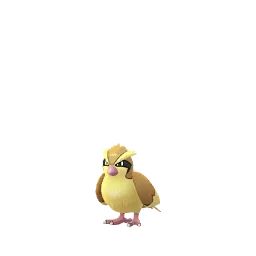 #016RoucoolNormalVol12 Candy to evolve
 #010ChenipanInsecte12 Candy to evolve
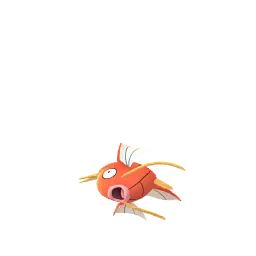 #129MagicarpeEau400 Candy for Gyarados
Their full entries in the Pokédex:  Pidgey,
 Caterpie and Magikarp.
Magicarpe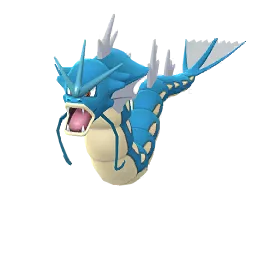 Léviator400 bonbons (360 si purifié)
Stardust and powering up
Every catch earns Stardust, as do hatches, Raids and Research rewards. It is used to power up a Pokémon (raise its level, and therefore its CP), together with Candy. Beyond level 40, you also need XL Candy, a rare version of Candy obtained notably by transferring or trading Pokémon, or through Rare Candy XL.
The second charged move
Unlocking a second charged move costs Stardust and Candy. In the game’s data, four tiers come up:
- 10,000 Stardust + 25 Candy for many common Pokémon and starters;
- 50,000 + 50, the most frequent case;
- 75,000 + 75 for many rarer Pokémon;
- 100,000 + 100 for most Legendary and Mythical Pokémon.
It is an investment that is mostly useful in the GO Battle League, where having two charged moves forces your opponent to guess.
CP and IVs: what makes a good Pokémon
- CP (Combat Power) sums up the Pokémon’s current strength. It depends on its species, its level and its IVs.
- IVs (individual values) are three hidden ratings, from 0 to 15, in Attack, Defense and HP. A “100%” Pokémon has 15 in all three.
To find out the IVs, use the Appraisal from the Pokémon’s menu: your team leader displays three bars and a number of stars. Three stars means very good IVs; a red background with three stars means a 100%.
| Pokémon | Études (niv. 15) | Raid, œuf (niv. 20) | Raid avec météo (niv. 25) |
|---|---|---|---|
| Mewtwo | 1,791 | 2,387 | 2,984 |
| Rayquaza | 1,643 | 2,191 | 2,739 |
| Lucario | 1,158 | 1,544 | 1,930 |
Investing wisely
- Don’t power up everything: focus your Stardust on the Pokémon you will use in Raids or the GO Battle League.
- Evolve before powering up: CP follows evolution, and powering up costs the same before or after.
- Keep your “Lucky” Pokémon (obtained through trading): powering them up costs half as much Stardust.
Testez-vous
What are IVs?
They are three hidden values from 0 to 15 (Attack, Defense, HP) unique to each Pokémon. 15/15/15 is a perfect Pokémon.
How much Candy does it take to evolve Magikarp into Gyarados?
400 Candy.
What is XL Candy for?
To power up a Pokémon beyond level 40.