
On October 30, 2024, The Pokémon Company, Creatures and DeNA launched Pokémon Trading Card Game Pocket on iOS and Android, a free mobile version of the trading card game. Two years later, the app has just opened its C series with Dual Fusion, new special packs and an anniversary program that runs until December.
It is the perfect time to jump in, or to come back after a break. This guide covers the basic rules, the game’s currencies, decks you can build without spending a cent, recurring events and the mistakes that cost beginners dearly.
The basics: what to know before opening your first pack
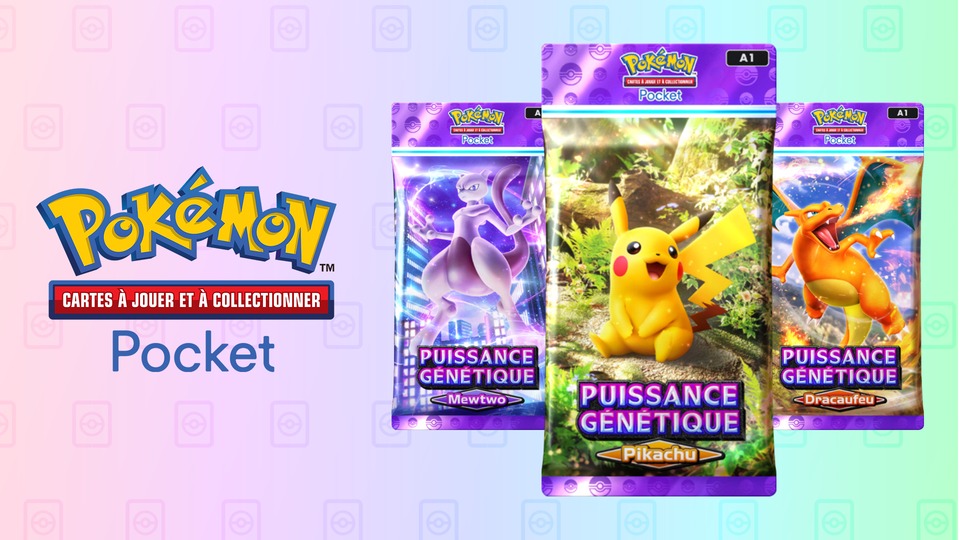
The idea behind Pokémon TCG Pocket fits in one sentence: two free packs per day. Each recharge fills up in twelve hours, and pack hourglasses, handed out as rewards for many missions, let you shorten the wait. Each pack contains five cards, including artwork taken from the history of the TCG, brand-new cards and the famous immersive cards, which draw you into the scene of the illustration.
Another essential mechanic: pack points. Every pack you open earns some, and these points, specific to each expansion, can be exchanged for the card of your choice from that same expansion. It is the safety net that keeps you from relying on luck alone.
Shorter battles than the classic TCG
Battles keep the spirit of the physical card game (which our Getting started with the Pokémon TCG guide presents in detail), with simplified rules for matches lasting a few minutes:
- a 20-card deck, with at most two copies of the same card;
- no Energy cards: the Energy Zone generates one each turn, except on the very first turn of the player who goes first;
- three Bench spots instead of five;
- three points to win: a regular Pokémon Knocked Out earns 1 point, a Pokémon ex 2 points, and a Mega Evolution ex 3 points, which means an instant win.
Currencies, hourglasses and Premium Pass: where your money goes
Pokémon TCG Pocket has a lot of resources, which can be confusing at first. The good news is that most of them are earned just by playing:
- pack hourglasses speed up the opening of your free packs;
- Wonder Stamina, which recharges over time or with Wonder Hourglasses, lets you try Wonder Pick, that is, grab one of the cards opened by other players;
- special pack hourglasses, new with the C series, recharge once a week;
- shop tickets and Shinedust are earned from missions and events;
- Poké Gold is the only paid currency: it is used to speed up your collection once free resources run out.
The monthly Premium Pass adds dedicated missions whose rewards, notably premium tickets, can be exchanged for promo cards and accessories in the shop. It remains optional: all expansions, game modes and events are available without paying. Good to know: since September 30, each shop item displays its own exchange deadline, and the discounted Poké Gold offers available since the game’s launch ended with the arrival of the C series.
Which decks to start with without breaking the bank
For a long time, the main obstacle for a new player was building a playable deck with a small collection. The big update at the end of October changed that, as we explained in our article on community decks. Here are the options to favor:
- rental decks: built with cards from the latest packs, they can now be used as many times as you like, and the selection changes with each expansion;
- the six Dual Fusion loaner decks, playable until December 16, to try out dual-type cards before owning them;
- the Dragon-type elite deck built around
 Mega Rayquaza ex, given to all players in the Gifts menu;
- community decks: you browse lists published by other Trainers, copy them, and the game shows you which cards you are missing.
To build your first personal deck, a simple method works well: one main Pokémon ex, a second attacker as backup, one or two Energy types at most (beyond that, the Energy Zone becomes unpredictable), and a handful of Trainer cards that draw cards. Start from a community deck close to your collection, then gradually replace the missing cards.
Events not to miss
The game runs on a rhythm of regular events. Event Wonder Picks showcase promo cards: in October, the 23rd edition celebrated Skyla with  Charmander et
 Drampa (our article). Emblem events and event battles reward regular play, and trading with friends, governed by rarity limits, helps you complete a collection. The calendar for the coming weeks is particularly packed:
- November 6 to 16: Dual Fusion emblem event and call-to-battle missions (pack hourglasses, Shinedust);
- November 14 to 21: bonus week, with a free pack for every day you log in;
- November 18 to December 2: C series promo pack Vol. 1, with battles that have set deck rules;
- November 26 to December 26: themed promo cards, three themes over three weeks;
- December 1st to 15: ranked season C1;
- December 6 to 13: community week dedicated to trading.
C series and second anniversary: what is changing right now
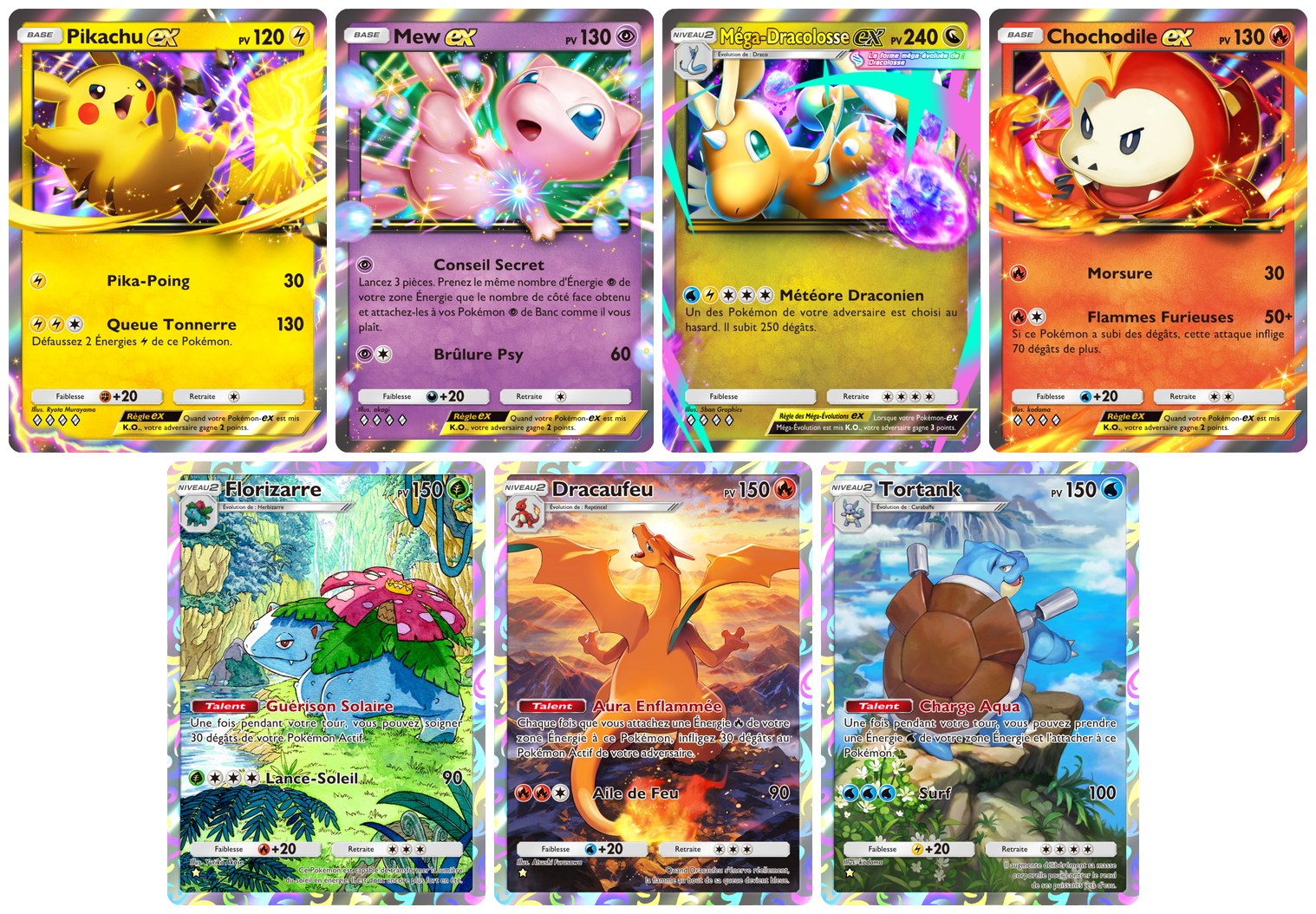
Released on October 29, Dual Fusion introduces the game’s first dual-type cards.  Mega Mewtwo X ex combines the Psychic and Fighting types,
 Mega Greninja ex the Water and Darkness types, and
 Pikachu gets a new ex card. A new format also appears: special packs, opened with the dedicated weekly hourglasses, guarantee at least one ★ card. The first one, Special Pack: First Partners, brings together the starter Pokémon of the nine regions until December 26.
For a new player, the anniversary program is a godsend:
- until December 15: a coupon to exchange for a pack that contains a guaranteed ★★ card;
- until October 20, 2027: the Pikachu missions, which require ten days of logging in and offer Pikachu card packs as well as a Pikachu ex card with immersive artwork;
- until January 27: the collection missions, which give useful Trainer cards, including Sabrina and Red.
Mistakes to avoid
- Leaving your recharges full. A pack that is ready but unopened is wasted recharge time: open your packs as soon as they are available.
- Spending your pack points at random. Save them for the card a specific deck is missing, rather than for a rare card you will never use.
- Neglecting missions. They are the main source of hourglasses, tickets and free cards; a daily visit is enough.
- Mixing too many Energy types. With three types, the Energy Zone risks producing the wrong Energy at the wrong time.
- Forgetting deadlines. Events, the shop and coupons all have an expiry date: check it before putting off an exchange.
- Buying Poké Gold too early. Use up the free anniversary resources first: it is the most generous time of the year.
Key takeaways
Two years after its launch, Pokémon TCG Pocket has never been so welcoming: unlimited rental decks, community decks, a free elite deck and a very generous anniversary program until December. Open your two daily packs, follow the missions, start from a community deck, and the C series will give you an excellent starting point. To keep up with upcoming expansions and events, head to our Trading Card Game section.
Source: official Pokémon TCG Pocket website, pokemon.com, October producer’s letter (in French)