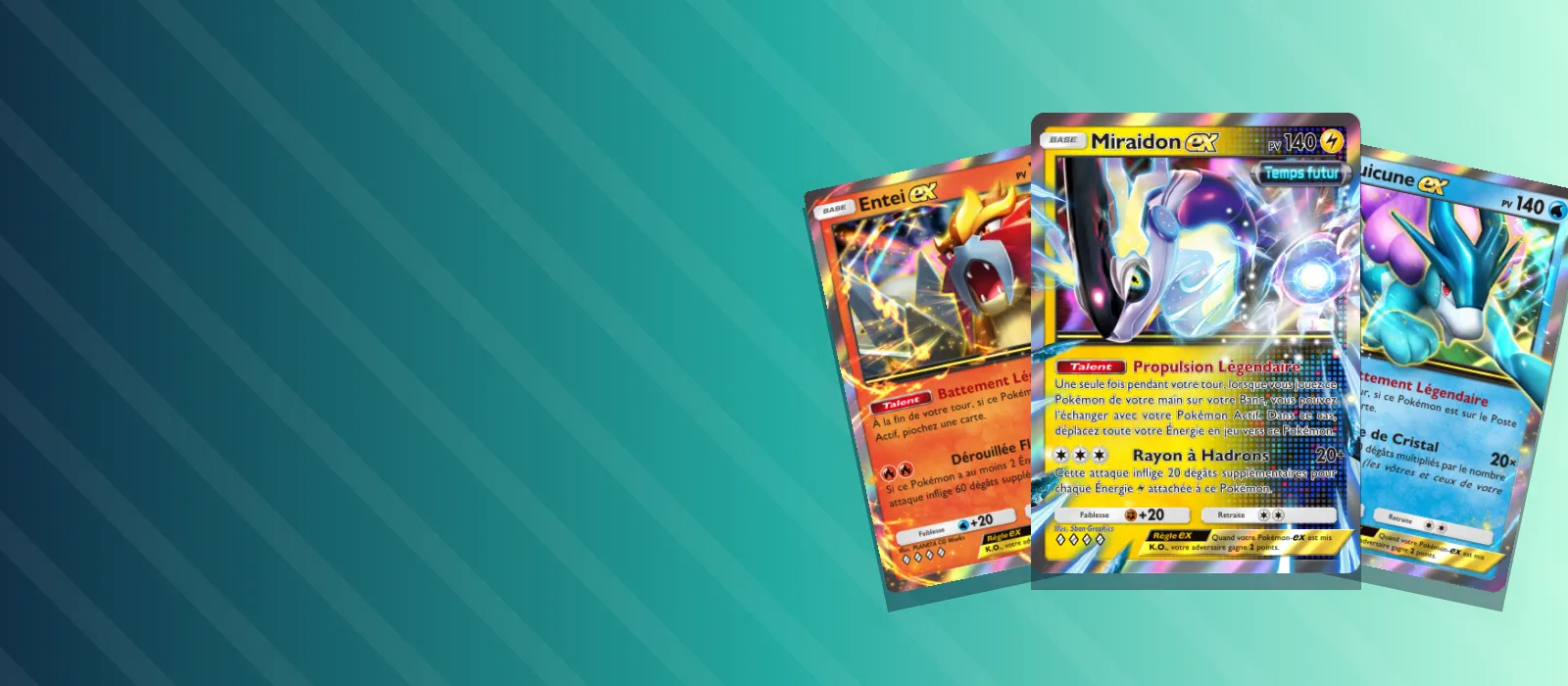
Pokémon TCG Pocket uses the same types as the classic Pokémon Trading Card Game. But with no Energy cards and no Resistance, the choice of types weighs differently: it determines how consistent your deck is and how you exploit your opponent’s Weaknesses.
The ten types
Each Pokémon belongs to one of these types, which also determines the Energy it needs to attack. The Colorless type does not match any Energy in the Zone: a Colorless cost is paid with any Energy.- Grass
- Fire
- Water
- Electric
- Psychic
- Battle
- Dark
- Steel
- Dragon
- Colorless
| Type | Usual strengths | Notable examples |
|---|---|---|
| Grass | Healing, acceleration through Abilities, solid Basic Pokémon | Celebi ex, Mega Venusaur ex, Meowscarada ex |
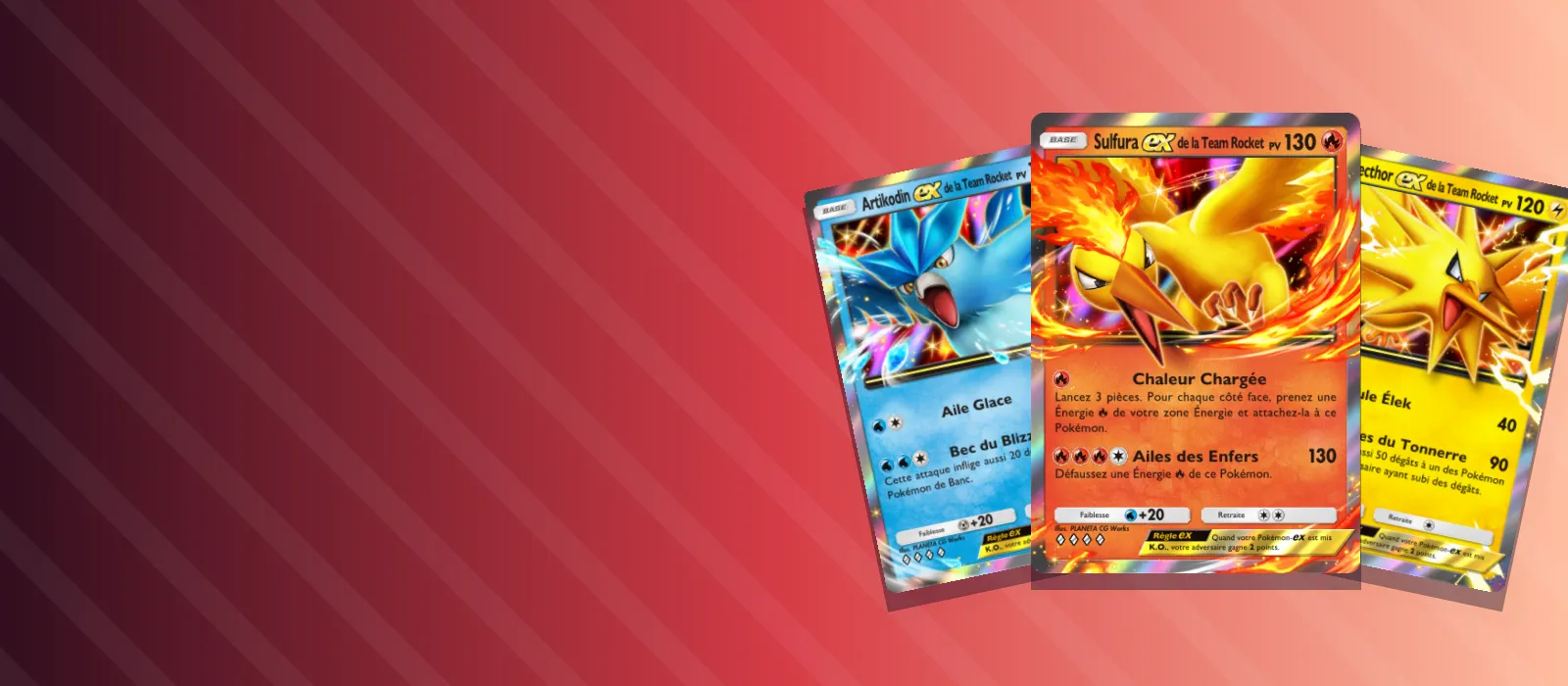
| Fire | Heavy damage, Burn, attacks that discard Energy | Charizard ex, Mega Charizard X ex, Mega Blaziken ex |
| Water | Energy acceleration (Misty), control of the opponent’s deck | Mega Gyarados ex, Suicune ex, Vaporeon ex |
| Electric | Fast Basic Pokémon, damage tied to the Bench | Pikachu ex, Miraidon ex, Magnezone ex |
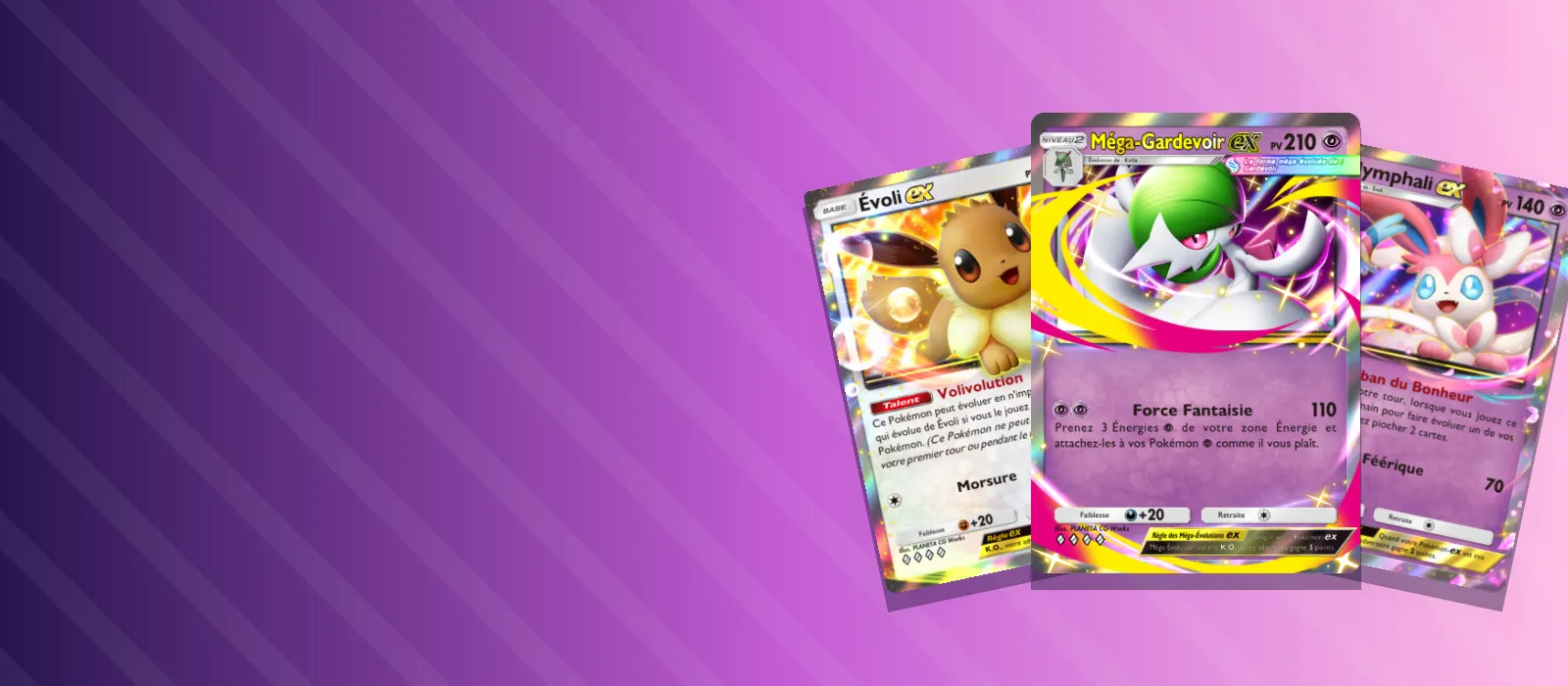
| Psychic | Acceleration (Gardevoir), powerful Mega Evolutions | Mewtwo ex, Mega Gardevoir ex, Mega Altaria ex |
| Battle | High damage for little Energy | Mega Lucario ex, Koraidon ex, Garchomp ex |
| Dark | Indirect damage, hindering the opponent | Darkrai ex, Mega Gengar ex, Mega Absol ex |
| Steel | Lots of HP, damage reduction | Dialga ex, Mega Metagross ex, Mega Steelix ex |
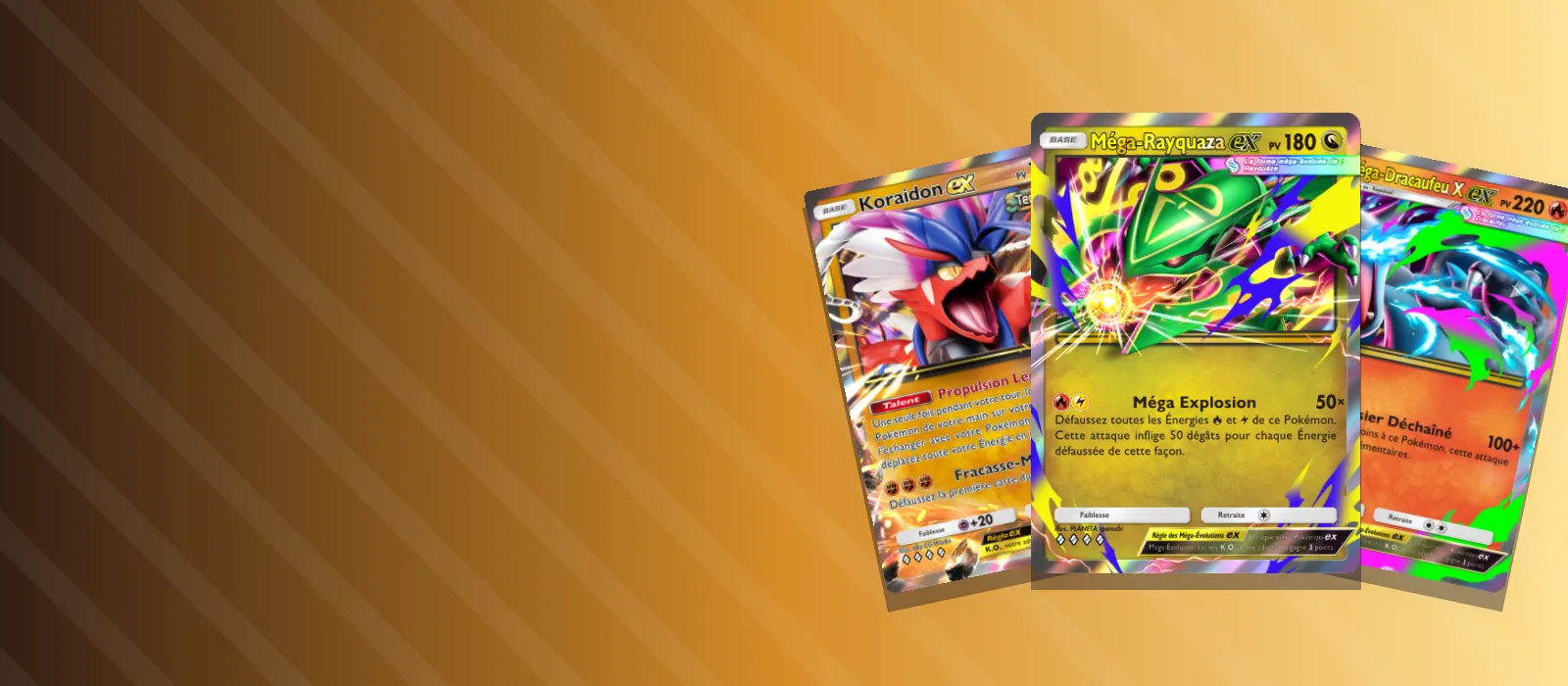
| Dragon | Very strong attacks but mixed costs | Dragonite ex, Flygon ex, Mega Rayquaza ex |
| Colorless | Adapt to every deck | Snorlax ex, Mega Kangaskhan ex, Eevee ex |
Weakness: +20 damage
In the classic TCG, a Weakness doubles damage. In Pocket, it simply adds 20 damage to the attack. There is no Resistance. Weakness therefore matters, but it does not decide a matchup on its own: 20 damage is often just what is missing to Knock Out a Pokémon ex in one hit.Dragon Pokémon
Dragon Pokémon have no Dragon Energy: their attacks require Energy of other types. Mega Rayquaza ex, for example, attacks with one Fire Energy and one Lightning Energy, then deals 50 damage for each Energy of those two types it discards. A Dragon deck therefore often has to pick two types in the Energy Zone, which makes it less consistent, but its attacks more than make up for it.Choosing your types in the Energy Zone
Recommended
One type
Every Energy generated is usable. This is the choice of the vast majority of decks, even when a secondary Pokémon is of another type.
For Dragons
Two types
Useful for Dragon Pokémon or a deck with two very different attackers. Expect a few turns where the Energy comes out wrong.
Avoid
Three types
The Energy Zone draws at random: with three types, an attacker may wait several turns for the right Energy.
New: dual-type Pokémon
Since autumn 2026, some cards have two types at once, with two colors on the card. Their appeal is offensive: their attacks can exploit two Weaknesses, that of Pokémon weak to the first type as well as that of Pokémon weak to the second. The first announced example is Mega Mewtwo X ex, a Psychic and Fighting type, shown alongside Fuecoco ex and Piplup ex at the 2026 World Championships.Abilities that generate Energy
Some Pokémon get around the limit of one Energy per turn, and form the core of many decks:- Gardevoir (Genetic Apex): its Psy Shadow Ability attaches a Psychic Energy from the Energy Zone to the Active Pokémon, once per turn.
- Mega Gardevoir ex (Fantastical Parade): its attack takes three Energy from the Zone and spreads them among your Psychic Pokémon.
- Team Rocket’s Moltres ex: its attack flips three coins and attaches one Fire Energy for each heads.
- Darkrai ex: each Energy attached from the Zone deals 20 damage to the opponent’s Active Pokémon thanks to its Nightmare Aura Ability.