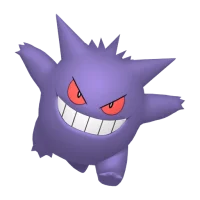
Two Pokémon of the same species and the same level don’t necessarily have the same stats. Four elements come into play: the species’ base stats, IVs, EVs and the nature. For the main adventure there’s no need to optimize everything; for 7★ raids and online battling, it’s essential.
The six stats
HP, Attack, Defense, Special Attack, Special Defense and Speed. Each species has fixed base stats that define its profile. For example, here are the three Paldea starters in their final stage:
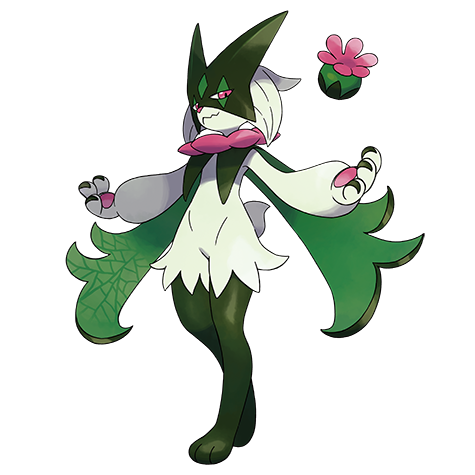
- HP76
- Attack110
- Defense70
- Sp. Atk81
- Sp. Def70
- Speed123
Total 530
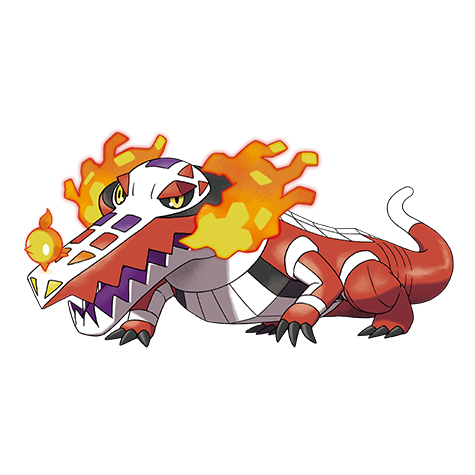
- HP104
- Attack75
- Defense100
- Sp. Atk110
- Sp. Def75
- Speed66
Total 530
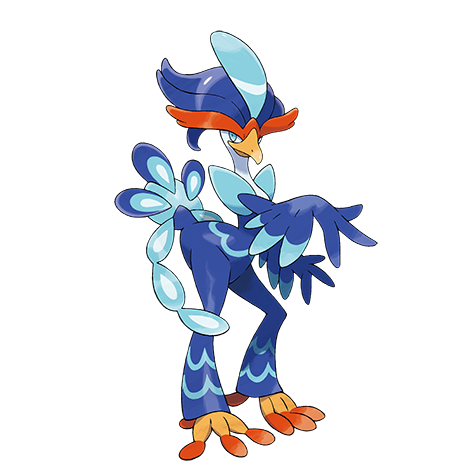
- HP85
- Attack120
- Defense80
- Sp. Atk85
- Sp. Def75
- Speed85
Total 530
IVs: genetic potential
IVs (individual values) are values from 0 to 31 assigned to each stat when a Pokémon is born or caught. An IV of 31 gives 31 more stat points than an IV of 0 at level 100. A “6 IV” Pokémon has 31 in every stat.
- Checking IVs: the Judge function unlocks after the end of the story (The Way Home scenario) by visiting a Pokémon Center. In your boxes, press + to display it.
- Improving IVs: Hyper Training. In Montenevera, near the Pokémon Center, a man and his Abomasnow will max out one IV in exchange for a Silver Bottle Cap, or all IVs for a Gold Bottle Cap. The Pokémon must be at least level 50.
- Passing down IVs: through breeding, see our Eggs guide.
EVs: training
EVs (effort values) are gained by defeating Pokémon: each species yields EVs in one specific stat. At level 100, 4 EVs = 1 stat point.
Where to train each stat
| Stat | Pokémon to battle | Where |
|---|---|---|
| HP | Paldean Wooper | South Province (Area Five) |
| Attack | Yungoos | Inlet Grotto |
| Defense | Tarountula | Poco Path |
| Special Attack | Gastly | South Province (Areas One and Three), East Province (Areas Two and Three) |
| Special Defense | Toedscool | South Province (Areas Four and Five) |
| Speed | Rookidee | South Province (Areas Three and Five), East Province (Areas One to Three) |
To check that EVs are maxed out, a Trainer and her Luxio, in the south of Levincia, give the Effort Ribbon to Pokémon that have been trained to the maximum.
Nature
Every Pokémon has one of 25 natures. Most raise one stat by 10% and lower another by 10%. Five are neutral (Hardy, Docile, Quirky, Bashful, Serious).
| +10% −10% | Attack | Defense | Sp. Atk | Sp. Def | Speed |
|---|---|---|---|---|---|
| Attack | Hardy | Lonely | Adamant | Naughty | Brave |
| Defense | Bold | Docile | Impish | Lax | Relaxed |
| Sp. Atk | Modest | Mild | Bashful | Rash | Quiet |
| Sp. Def | Calm | Gentle | Careful | Quirky | Sassy |
| Speed | Timid | Hasty | Jolly | Naive | Serious |
The most commonly used are in bold: Adamant and Jolly for a physical attacker, Modest and Timid for a special attacker. The raised stat is shown in red in the summary, the lowered one in blue.
Changing a nature’s effect: Mints
A Mint gives a Pokémon the effect of a different nature (the original nature’s name stays displayed). They are obtained as rewards from 5★ and 6★ Tera Raid Battles, among other sources.
The formula, for the curious
At level 100, a stat (other than HP) is roughly equal to: (2 × base + IV + EV ÷ 4 + 5) × nature. At level 50, the part in parentheses is halved (not counting the +5). That’s why an optimized Pokémon can have more than 100 points of difference from another of the same species.
Academy pop quiz
What is the maximum number of EVs a Pokémon can have?
252 per stat and 510 in total.
Do “Let’s Go!” battles give EVs?
No: only real battles give them.
Where and how do you do Hyper Training?
In Montenevera, near the Pokémon Center, with a Silver or Gold Bottle Cap, for a Pokémon of level 50 or higher.